

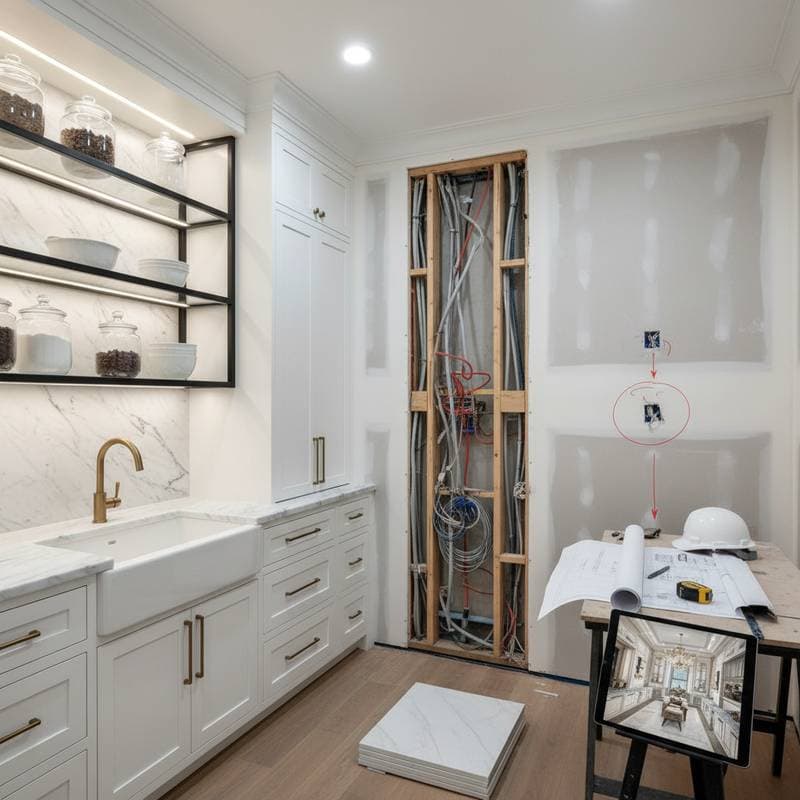
The Actual Costs of Kitchen Pantry Upgrades in 2026
The National Kitchen and Bath Association survey reveals that 58 percent of homeowners prioritize storage efficiency in renovations, yet only 37 percent adhere to their budgets for pantry projects. Escalating material prices, variable labor costs, and intricate design elements contribute to wide-ranging expenses. Homeowners planning a pantry upgrade must look beyond basic per-square-foot calculations and grasp the full implications of project scope, design choices, and management practices.
Identifying the Core Cost Challenges
Homeowners frequently approach pantry upgrades with the notion of a straightforward endeavor. They anticipate that installing shelves, cabinets, and lighting will incur lower costs than a complete kitchen overhaul. However, Remodeling Cost Value Index data indicates average expenses of $6,800 to $24,500, influenced by layout and finish quality. Custom built-ins, electrical installations, and drywall modifications routinely cause initial estimates to double.
The issue stems from scope underestimation rather than deliberate extravagance. For a standard 40-square-foot walk-in pantry, requirements may include structural adjustments, new flooring, and HVAC modifications. These elements introduce unforeseen costs, and absent a value engineering strategy, expenses mount rapidly.
Professional and Structural Considerations
A pantry renovation extends beyond mere cabinet installation. It typically engages various trades, including carpenters, electricians, painters, and occasionally plumbers for features like prep sinks or beverage stations. Lisa Hartman, a certified kitchen planner with twelve years at Pacific Design Cabinetry, notes, “Homeowners often forget that a pantry upgrade interacts with the kitchen’s mechanical systems. Moving a wall or adding recessed lighting may require new wiring or duct rerouting, which adds thousands to the final bill.”
In older residences, expanding or removing walls might uncover obsolete wiring or moisture damage. Such discoveries necessitate immediate repairs to meet code standards, potentially increasing total costs by 15 to 25 percent. Contingency funds prove vital in these scenarios.
Financial Planning Steps for Pantry Remodels
Structured financial planning helps prevent budget overruns. Homeowners benefit from a systematic approach to retain oversight.
Step 1: Establish the Initial Budget
Begin with a baseline estimate of $150 to $600 per square foot, varying by project type from basic retrofits to elaborate butler’s pantry additions. Allocate specific amounts for design fees, permits, and materials.
Step 2: Incorporate a Contingency Allowance
Experts advise 15 percent for new builds and up to 25 percent for renovations. Surprises like framing repairs or electrical updates occur frequently.
Step 3: Define Project Boundaries
Determine inclusions such as refrigeration units, sinks, or bespoke millwork upfront. These decisions affect required trades and supplies. Lock in the design prior to any demolition to curb scope expansion.
Step 4: Obtain Itemized Quotes
Solicit detailed bids from three licensed contractors. Breakdowns reveal potential overcharges in labor or add-ons.
Step 5: Monitor Expenses Regularly
Employ project management tools or spreadsheets for ongoing tracking. Chris Delaney, project manager at UrbanCraft Renovations, states, “You can’t control what you don’t measure. Weekly cost tracking is the only way to stay on budget once walls are open.”
Cost Analysis by Pantry Configuration
Pantry types feature unique expense profiles. Familiarity with these aids in selecting budget-aligned designs.
Reach-In Pantry:
This economical choice integrates into current cabinetry. Budget $2,000 to $6,000, based on shelving options and door enhancements.
Walk-In Pantry:
It demands allocated space and enhanced illumination. Anticipate $7,000 to $15,000, plus $2,000 to $3,000 for wall reframing if necessary.
Butler’s Pantry:
As a premium auxiliary space for preparation and storage, it averages $15,000 to $28,000. Luxury elements like appliances, stone surfaces, and tailored cabinetry can exceed $35,000.
Hidden or Sliding Wall Pantry:
Popular in smaller kitchens, costs fall between $5,000 and $12,000, contingent on hardware and finishes. Precise setup ensures lasting performance.
Overlooked Expenses in Pantry Projects
Despite thorough preparation, certain costs surprise novice renovators.
- Structural Supports: Extending walls might need extra framing or load-bearing reinforcements, costing $1,000 to $3,000.
- Electrical Enhancements: Options like LED strips, recessed fixtures, or under-shelf lights range from $500 to $2,500.
- Flooring Integration: Extending kitchen materials into the pantry adds $1,200 to $3,000.
- Permits and Checks: Local regulations impose fees of $300 to $900.
- Labor Variations: High demand for skilled workers can elevate rates by 10 to 15 percent during the project.
Rafael Ortiz, interior contractor at BuildSmart Solutions, observes, “Homeowners often think of a pantry as a simple closet. But when you introduce plumbing, electrical, and cabinetry customization, you’re operating at kitchen-grade costs.”
Strategies for Value Engineering and Expense Management
Value engineering optimizes designs for functionality while minimizing unnecessary expenditures.
- Opt for Semi-Custom Cabinets: These offer adaptability at 20 to 30 percent below fully custom prices.
- Select Resilient Mid-Range Materials: Melamine or laminate linings cut costs without sacrificing appearance.
- Adopt Standard Shelf Sizing: Deviating from norms increases production time and waste.
- Incorporate Lighting from the Start: Early planning avoids costly adjustments.
- Combine with Broader Renovations: Pairing with kitchen work streamlines labor pricing.
Janet Liu, financial consultant at HomeValue Advisors, advises, “Bundling jobs and specifying mid-range finishes often yields the best cost-to-value ratio. Homeowners should focus on durability and layout efficiency rather than luxury finishes that do not add resale value.”
Selecting and Overseeing Professionals
Contractor selection impacts both expenses and timelines. Confirm credentials, coverage, and past client feedback. Pose targeted queries prior to agreements:
- What portion of the estimate covers labor versus materials?
- How does the firm price change orders?
- What measures address material price increases?
Neglecting these can lead to expansions or conflicts. Engaging a certified designer or manager, at 8 to 15 percent of costs, coordinates efforts and averts excesses, often yielding net savings.
Influences of Location and Market Conditions
Expenses vary significantly by area. Urban settings surpass national averages by 20 to 30 percent due to labor scarcity. Rural locations provide lower rates but longer supply delays. Market shifts, such as 5 to 10 percent fluctuations in imported hardware, affect budgets. Flexible sourcing mitigates these risks.
Safeguarding Your Pantry Investment Over Time
To preserve renovation benefits, prioritize maintenance from day one. Schedule annual inspections for cabinet hardware, lighting fixtures, and structural integrity to catch issues early. Select moisture-resistant materials and organize storage to prevent wear. These practices extend the lifespan of your upgrade, ensuring sustained functionality and value for years ahead.