
Why Half of Wet Room Projects Go Over Budget
Wet room remodels promise a luxurious, seamless bathroom experience, but statistics show that nearly half of these projects exceed initial budgets. Homeowners often underestimate the complexities of waterproofing, drainage, and structural adjustments required for a fully open, curbless shower area. This article explores the hidden costs, common pitfalls, and strategies to keep your project on track while achieving a durable, spa-like retreat.
Understanding the True Costs
The allure of a wet room lies in its minimalist design, where the entire bathroom functions as a waterproof zone. However, the expenses extend far beyond visible elements like tiles and fixtures. Professional estimates reveal that a standard wet room remodel ranges from $17,000 to $32,000, depending on size and materials. These figures account for the specialized work needed to prevent water damage in an open environment.
Break down the typical expenses as follows:
- Drain system and floor slope work: $2,000 to $4,000. Creating a subtle slope toward the drain ensures proper water flow without compromising aesthetics.
- Tiling (floor and wall): $5,000 to $10,000. High-quality porcelain or stone tiles cover large surfaces, requiring precise installation to maintain waterproof integrity.
- Plumbing and fixtures: $4,000 to $8,000. Relocating pipes and installing water-resistant fixtures demands expert plumbing to avoid future leaks.
- Glass or partitions (optional): $1,000 to $2,000. Frameless glass enclosures add elegance while containing splashes.
- Labor and design fees: $5,000 to $8,000. Skilled contractors handle the intricate coordination of slopes, seals, and finishes.
Bathroom contractor Luis Romero of Coastal Tile & Build notes, “Most of the cost is under the surface. People see tile and fixtures, but the real investment is in waterproofing and drainage.”
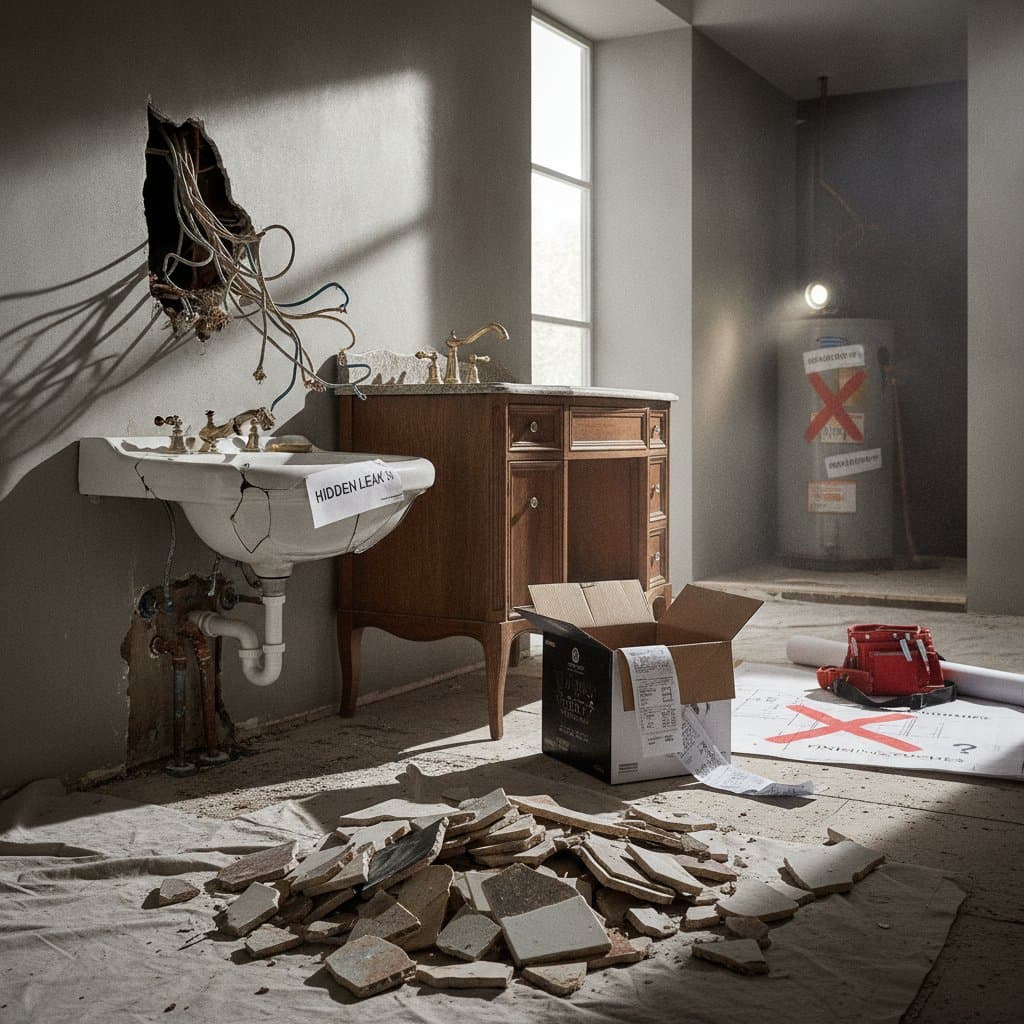
To safeguard against surprises, allocate an additional 15 percent of your budget for unforeseen issues, such as subfloor reinforcement or plumbing rerouting. These adjustments arise because wet rooms demand a level of precision that standard bathrooms do not.
The Design Side of Waterproofing
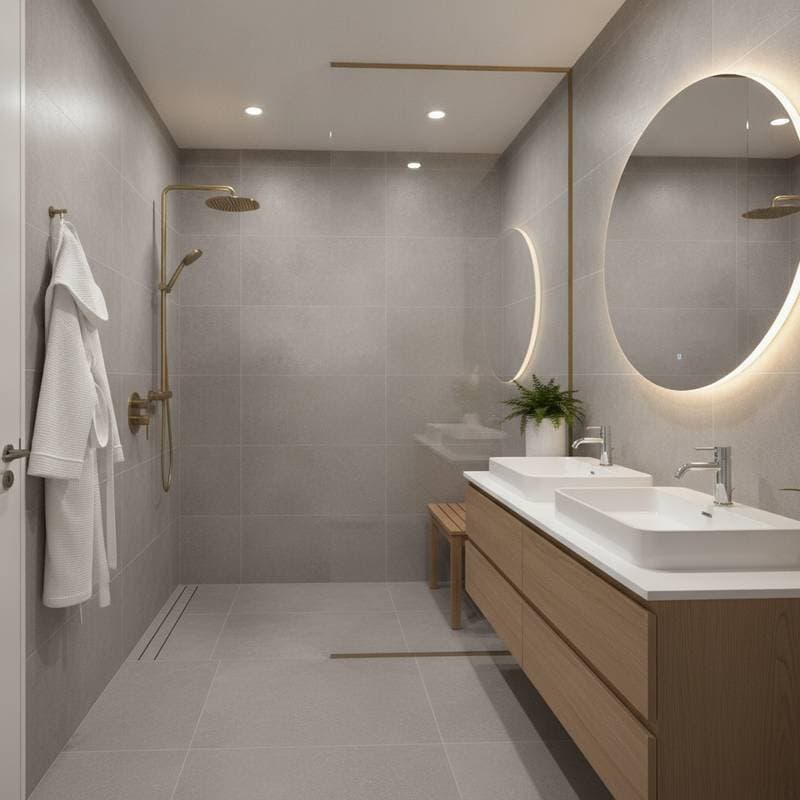
Effective waterproofing in a wet room integrates technical precision with thoughtful design. Choices in materials and layout directly influence both functionality and longevity. For example, opting for large-format tiles minimizes grout lines, reducing potential entry points for moisture.
Consider these design elements that enhance waterproofing:
- Large porcelain tiles: Fewer joints mean less grout to seal, simplifying maintenance and lowering leak risks.
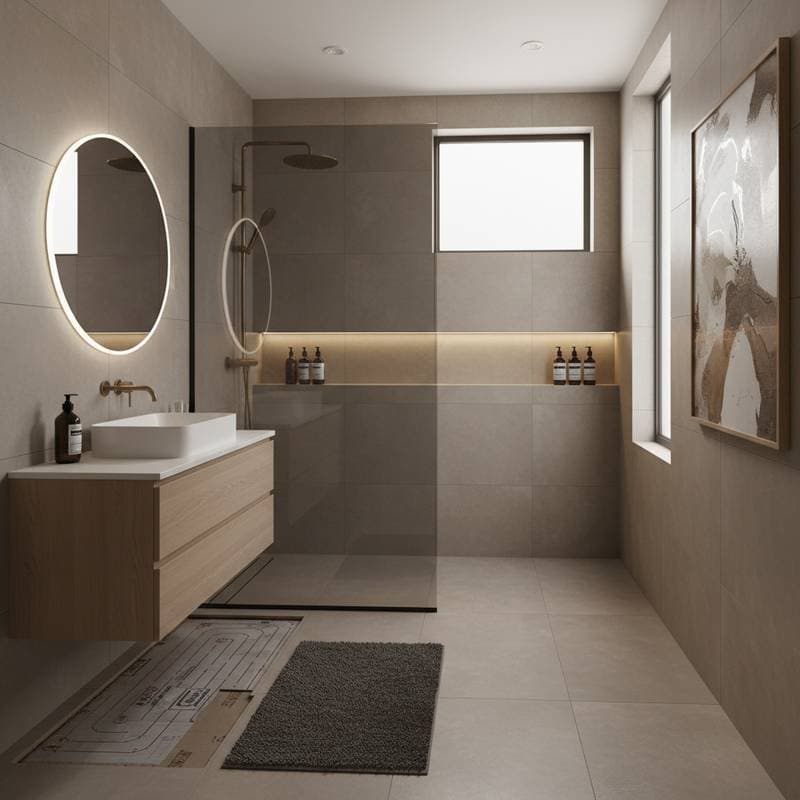
- Integrated wall niches: Built during construction, these storage solutions eliminate the need for post-installation drilling, which could compromise seals.
- Non-slip floor finishes: Select materials with a high slip-resistance rating to ensure safety in wet conditions without sacrificing style.
- Minimal grout colors: Neutral tones hide water spots and everyday wear, preserving the clean look over time.
Interior designer Olivia Chard from FormHaus Studio emphasizes, “A wet room should feel cohesive, not like a shower area tacked onto a bathroom. The materials, slope, and drainage need to function as one continuous surface.”
This unified approach not only elevates the visual appeal but also fortifies the waterproofing system. By aligning design with practical needs, homeowners create spaces that withstand daily use while exuding sophistication.
Common Mistakes to Avoid
Wet room projects falter when homeowners overlook the specialized requirements of an all-wet environment. Addressing these errors upfront can prevent budget overruns and structural issues down the line.
Key missteps include:
- Skipping professional waterproofing: Attempting DIY applications often leads to inadequate coverage, resulting in costly repairs from mold or water intrusion.
- Choosing the wrong drain location: Central drains complicate even sloping across the floor; linear drains positioned along walls or entries provide smoother water evacuation.
- Neglecting ventilation: Insufficient exhaust fans trap humidity, fostering mildew growth and degrading finishes prematurely.
- Overlooking storage solutions: Without planning for niches or vanities, clutter accumulates on the floor, hindering cleaning and increasing slip hazards.
- Using cheap grout or sealant: Inferior products crack under exposure to water, allowing leaks; prioritize epoxy-based or waterproof-rated options for durability.
Plumber and remodel consultant Henry Tan of BlueSeal Contracting advises, “I have repaired enough failed wet rooms to know that cutting corners rarely saves money in the long run. Waterproofing is a one-shot deal. Do it once, do it right.”
By consulting experts early and selecting quality materials, you mitigate these risks. A thorough site assessment before starting can reveal hidden challenges, keeping costs predictable.
Maintenance and Everyday Care
A completed wet room requires minimal upkeep, thanks to its seamless, tiled surfaces. Without curbs or doors, cleaning becomes straightforward, focusing on surface care to preserve the waterproof layers.
Follow these routines to maintain performance:
- Reseal grout lines every two to three years, unless epoxy grout is used, which resists degradation longer.
- Clear drains regularly to prevent clogs from hair, soap residue, or debris that could back up water.
- Employ a soft squeegee after each use to eliminate standing water and reduce mineral deposits.
- Activate ventilation immediately post-shower to expel moisture and maintain air quality.
Monitor for indicators of trouble, such as loosening tiles or persistent odors, which signal underlying moisture issues. Addressing them promptly through professional inspection averts extensive damage and preserves your investment.
Realizing the Benefits of Your Investment
Investing in a well-executed wet room transforms routine routines into indulgent experiences. The open layout maximizes space perception, while durable materials ensure lasting performance. Homeowners report increased property value and enhanced daily comfort from these upgrades.
Plan meticulously, select trusted professionals, and embrace the process. The result is a sanctuary that combines practicality with luxury, rewarding your foresight with years of reliable use.