
How Bad Contractors Can Derail Your 2026 Home Remodel and How to Prevent It
Recent surveys from leading home improvement platforms reveal a significant increase in complaints about contractor reliability. Homeowners frequently report problems with delays, subpar workmanship, and ineffective communication. With remodeling expenditures on the rise, selecting an unreliable contractor risks not only budget overruns but also incomplete projects that fail to realize their potential. This article examines the specific ways poor contractors inflict damage, identifies essential warning signs, and provides strategies to secure your remodel before work begins.
Personal experience underscores the importance of thorough vetting. During one home renovation, a painter applied an incompatible primer, resulting in uneven walls that required complete repainting. Such errors highlight why careful contractor selection remains essential. A successful remodel generates enthusiasm rather than frustration.
1. Inadequate Communication Practices
One of the most evident indicators of a problematic contractor involves inconsistent or absent communication. Unreturned calls or updates provided only after persistent prompting signal potential issues. Dependable contractors establish regular check-ins, often sharing progress images and concise daily reports. For instance, in a kitchen overhaul managed by Lumen Interiors, the crew utilized a collaborative application to deliver evening updates, enabling the homeowner to review and approve elements such as tile selections prior to installation. This approach minimizes misunderstandings and fosters confidence. When communication falters, minor discrepancies escalate into expensive corrections.
To evaluate communication upfront, schedule an initial meeting and pose targeted questions. Inquire about preferred update frequency, response times for inquiries, and tools for sharing project visuals. Request examples from past projects where they maintained client contact. These steps reveal their organizational habits early.
2. Ambiguous Bids and Incomplete Contracts
A well-crafted contract functions as a precise guide for the entire project. Unscrupulous contractors frequently submit bids lacking detailed breakdowns, aiming to win contracts through apparent affordability. Such proposals obscure expenses for materials, labor, and potential add-ons that surface as surprise charges. Reputable companies, like Brightfield Construction in Austin, furnish comprehensive lists covering finishes, hardware, and waste removal costs. This transparency allows homeowners to evaluate proposals fairly and maintain oversight.
Before committing, insist on a contract that specifies timelines, payment schedules, and change order procedures. Review it with a trusted advisor if needed. Clear terms establish accountability and prevent disputes over scope or costs.
3. Substandard Material Choices
Initial appearances of low-cost materials may deceive, yet they compromise durability over time. Dishonest contractors substitute approved items with inferior alternatives without consent. Consider specifying polished granite countertops only to receive thinly veneered laminates. Elena Cruz Studio reported an incident where a contractor installed economy-grade vinyl flooring in place of chosen hardwood, necessitating total replacement and additional downtime. Premium materials ensure aesthetic consistency and long-term performance. Unauthorized swaps erode the project's integrity.
Protect your selections by documenting all material specifications in the contract, including brand names and grades. Conduct periodic site inspections to confirm compliance. If discrepancies arise, address them immediately in writing to enforce standards.
4. Absence of Valid Licensing and Insurance
Credible contractors provide verifiable licensing, general liability insurance, and workers compensation coverage. These documents serve as safeguards against liabilities. Problematic contractors hesitate to present them or assert pending applications. Without proper insurance, accidents on your property could result in personal financial liability for medical or repair costs. Verify all credentials through state licensing boards prior to agreement. Established businesses display license details prominently on their sites and share proofs readily.
During the hiring process, request copies of insurance certificates and confirm active status with issuers. Ask for bond information if the project exceeds a certain value. This diligence shields you from unforeseen legal and financial risks.
5. Persistent Delays and Unsubstantiated Excuses
While unforeseen events occur in every remodel, repeated postponements indicate fundamental disarray. Common rationales involving absent teams, supply shortages, or hidden complications often conceal inadequate preparation. Harper & Vale Design oversaw a townhouse renovation in Pasadena with an accessible online schedule that accommodated disruptions. When rain halted outdoor tasks, workers shifted to indoor finishing, preserving overall progress.
Mitigate delay risks by incorporating contingency clauses in your contract, such as penalties for timelines exceeded by more than 10 percent. Discuss backup plans for common interruptions during interviews. Select contractors with proven track records in on-time completions, backed by client testimonials.
6. Neglect of Site Cleanliness and Safety Protocols
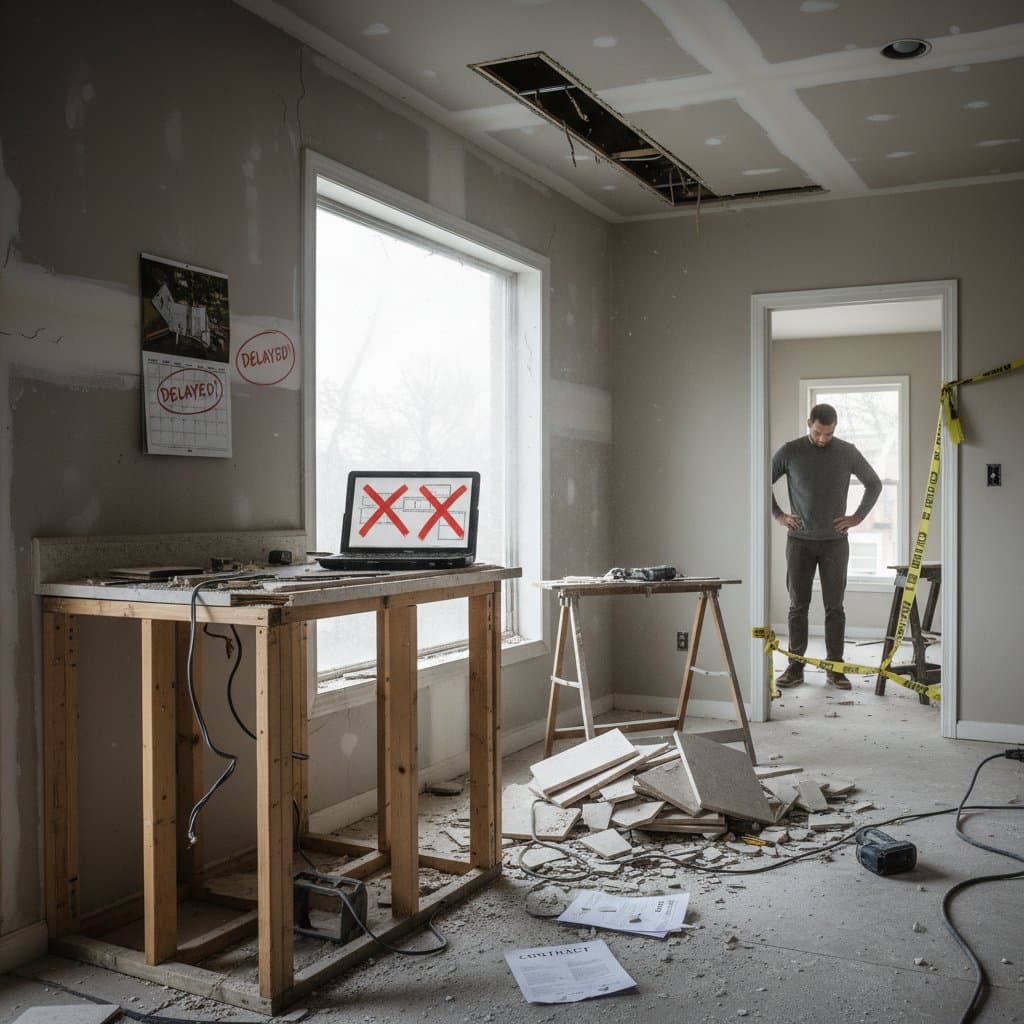
Disorderly work areas reflect broader negligence in execution. Scattered equipment invading living spaces and pervasive dust demonstrate disregard for homeowner comfort. Skilled teams deploy drop cloths, contain debris, and perform end-of-day cleanups. A visit to a neighbor's ongoing project revealed tools mingled with household items, creating hazards for family members and pets alike.
Prioritize safety by outlining expectations in the contract, including daily vacuuming and secure storage of materials. Observe the site during early stages to gauge adherence. Enforce protocols through scheduled walkthroughs to maintain a professional environment.
7. Disregard for Original Design Specifications
Effective remodels honor the architect's or designer's blueprint. Incompetent contractors alter elements unilaterally, insisting on their expertise. Mara Li Studio encountered this in a Brooklyn loft conversion when a crew proposed swapping specified fixtures to alter the ambiance, disrupting the cohesive scheme of raw materials and muted tones. Prompt intervention preserved the intended aesthetic.
Safeguard your vision by appointing a project overseer or conducting regular reviews. Include clauses requiring written approval for any deviations. Communicate design priorities clearly from the start to align all parties.
Strategies to Select Reliable Contractors for Your Remodel
The choice of contractor holds equal weight to material and color decisions. Competent professionals oversee finances, schedules, and teams diligently, viewing the project as a collaborative endeavor. To proceed confidently, examine online reviews from multiple sources, confirm licensing and insurance, and solicit references from three recent projects. Probe their approaches to updates, site management, and problem resolution.
Your 2026 remodel deserves to culminate in a harmonious space blending form and utility. Partnering with skilled contractors ensures each detail advances that goal, delivering enduring satisfaction without compromise.