
Understanding Mudroom Remodel Challenges in 2026: Features, Costs, and Budget Control
The National Association of Home Builders latest report indicates that 58 percent of homeowners undertaking entryway or mudroom remodels prioritize storage efficiency and organization. However, 41 percent of these projects exceed their budgets. This gap highlights the difference between ambitious design visions and practical financial oversight. A thoughtfully planned mudroom improves everyday routines, provided costs remain transparent and schedules realistic from the outset.
Homeowners frequently launch these projects envisioning a simple update, only to discover the complexities involved. Effective mudroom design balances aesthetics with utility, such as incorporating weather-resistant materials and multi-purpose storage. Addressing budget pitfalls early ensures the space serves as a welcoming transition zone rather than a source of stress.
Pinpointing Common Budget Overruns
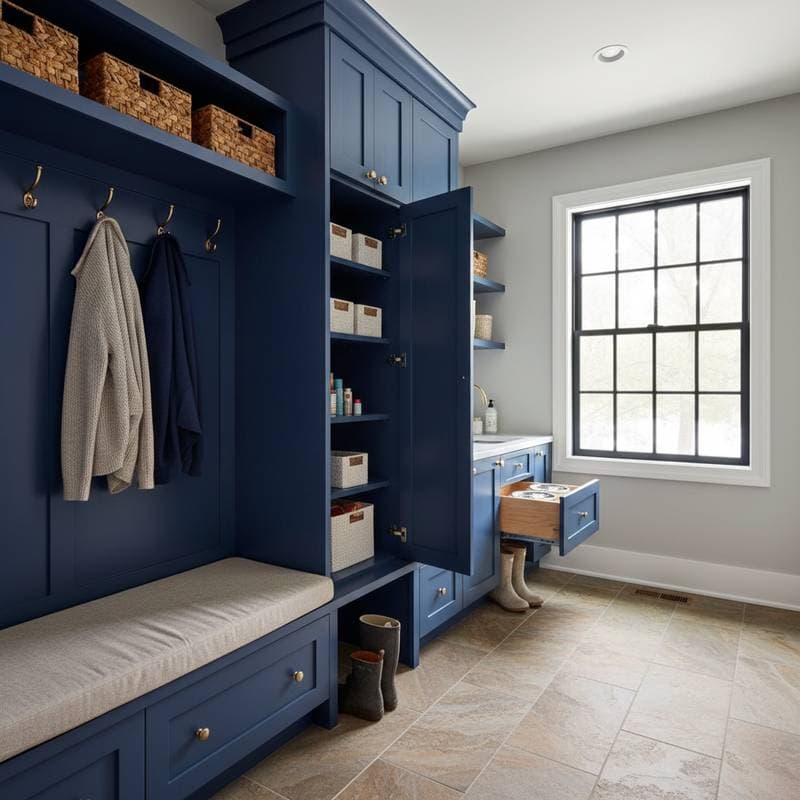
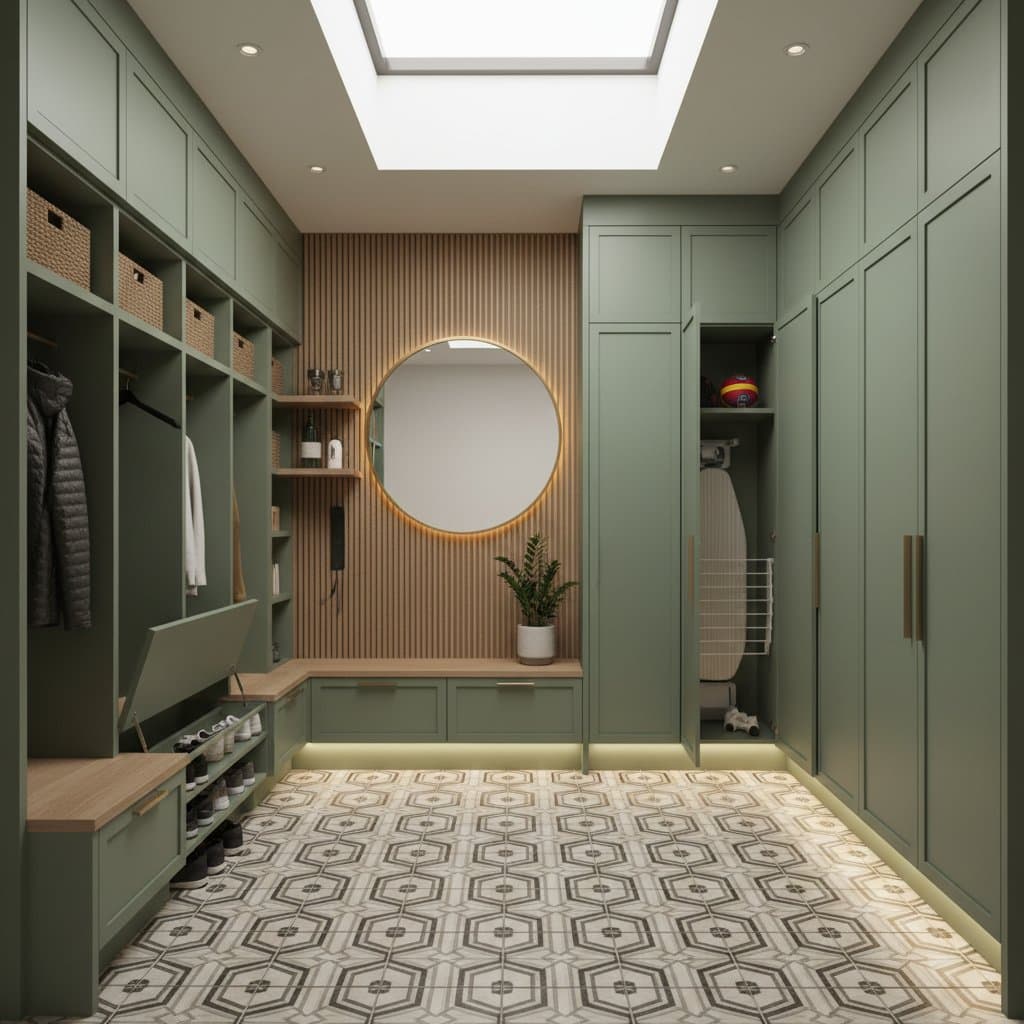
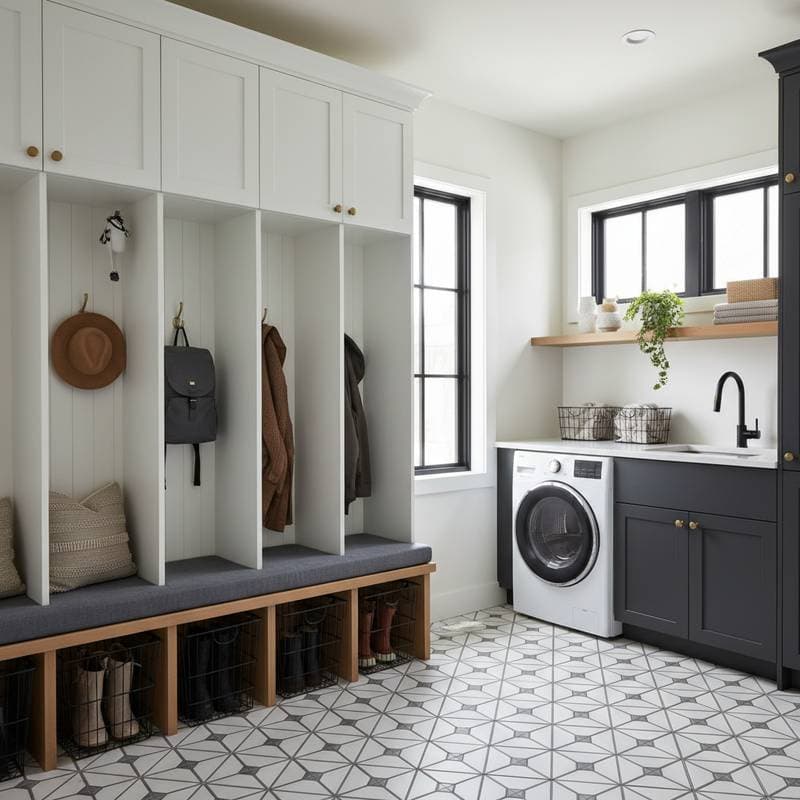
Many mudroom remodels begin with basic elements like a wooden bench and wall hooks, estimated at around $6,000. As planning progresses, desires for integrated cabinetry, heated flooring, or intricate tile patterns emerge. These additions can elevate expenses to $12,000 or even $18,000 without careful monitoring.
Scope creep represents the primary culprit. It arises when incremental choices, such as upgrading to soft-close drawers or adding a pet washing station, accumulate without recalculating totals. Homeowners benefit from establishing firm boundaries at the design stage. For instance, sketching a layout that prioritizes core needs over optional enhancements prevents unplanned expenditures.
Regional factors further complicate estimates. In urban areas with elevated labor rates, even straightforward installations cost more. Reviewing local market trends through resources like builder associations helps set accurate expectations.
Market Trends and Professional Perspectives
Remodeling Magazine data shows mid-range mudroom additions averaging $250 per square foot nationwide, with upscale versions reaching $400 per square foot. Labor accounts for approximately 60 percent of expenses, particularly in regions facing shortages of qualified craftsmen. Material prices fluctuate with supply chain issues, adding another layer of unpredictability.
Jeff Langley, project estimator at Harbor Build Group, observes, “Homeowners often plan for materials but forget labor escalation. A custom bench might cost $1,200 in materials, yet installation can double that figure.” Professionals emphasize starting with a comprehensive site assessment. This step identifies structural needs, like reinforcing walls for heavy cabinetry, which might otherwise lead to mid-project surprises.
In coastal or humid climates, selecting moisture-resistant options becomes essential. For example, opting for vinyl plank flooring over hardwood reduces long-term maintenance costs. Contractors recommend budgeting for permits and inspections, which vary by locality and can add $500 to $2,000.
Strategies for Effective Budget Management
Homeowners can maintain control through a systematic approach. Begin by outlining must-have elements, such as open shelving for shoes and hooks for coats. Delay decisions on decorative accents until essentials secure funding.
Obtain multiple itemized quotes from licensed contractors. These documents should delineate costs for materials, labor, and subcontractors. Comparing bids reveals opportunities for negotiation, such as sourcing fixtures from wholesale suppliers.
Incorporate value engineering techniques to optimize spending. Swap bespoke woodworking for ready-to-assemble units, potentially cutting costs by 20 to 30 percent. Similarly, choose LED lighting fixtures that meet code requirements without excess features.
Allocate a contingency fund of 10 to 15 percent. This buffer covers unforeseen issues, including wiring updates for new outlets or addressing subfloor water damage discovered during demolition. Tracking expenses weekly via simple spreadsheets keeps the project aligned.
Interior contractor Dana Ruiz from Buildwise Projects notes, “A clear project scope prevents budget drift. Clients who finalize layouts before demolition save both time and money.” Data from her firm reveals that defined specifications accelerate completion by 15 percent on average, minimizing labor charges.
Detailed Cost Analysis by Component
Breaking down expenses by feature aids precise planning. A standard 100-square-foot mudroom might include the following:
- Custom cabinetry and lockers: $4,000 to $8,000, influenced by wood type and hardware; maple finishes cost more than laminate.
- Durable flooring options (tile, luxury vinyl plank, or sealed concrete): $3,000 to $6,000; installation requires subfloor preparation in older homes.
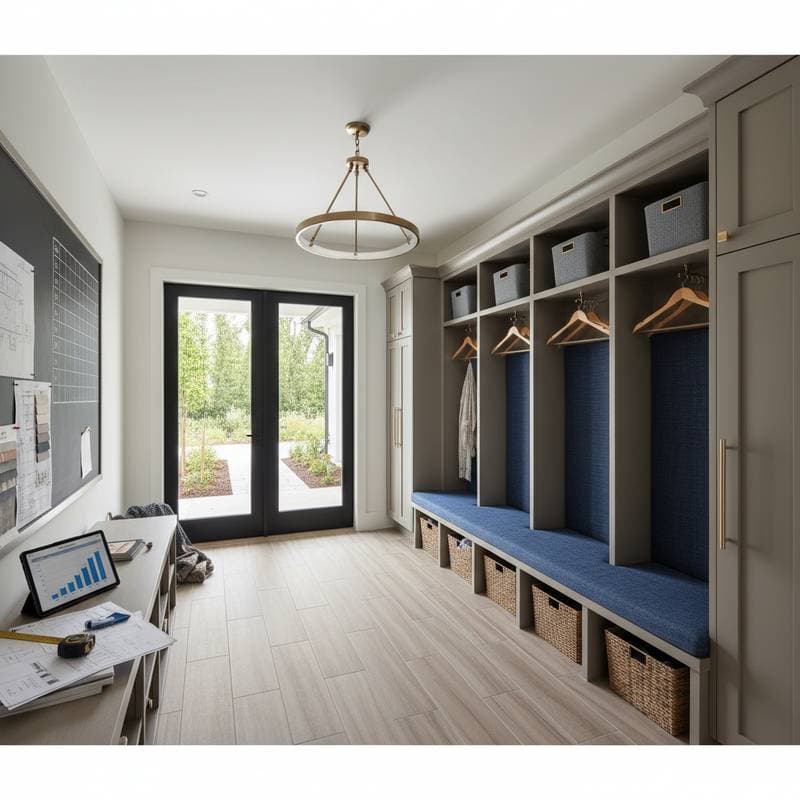
- Bench seating with integrated storage: $1,200 to $2,500; cushioned versions add comfort but increase price.
- Utility sink and associated plumbing: $1,500 to $3,000; routing pipes through existing walls demands skilled plumbers.
- Lighting fixtures and electrical work: $800 to $1,600; recessed options enhance visibility but require ceiling modifications.
- Paint, trim, and final finishes: $500 to $1,200; low-VOC paints suit family spaces with high traffic.
Optional enhancements like underfloor radiant heating or ventilated drying areas tack on $2,000 to $3,500. Evaluate these against potential energy savings; for instance, heating reduces cold-floor discomfort in winter but may not recoup costs quickly.
Totaling these, a basic remodel lands at $10,000 to $15,000, while comprehensive designs approach $25,000. Factoring in demolition and cleanup adds another $1,000 to $2,000.
Selecting Reliable Professionals
Engaging qualified experts minimizes errors and disputes. Seek contractors accredited by the National Association of the Remodeling Industry or equivalent local bodies. Verify credentials through online directories and request at least three recent references.
Insist on comprehensive contracts covering scope, timelines, and payment terms. Proof of liability insurance protects against on-site accidents. Written agreements should include change order protocols to handle any modifications formally.
Project manager Lynn Hayes of Northline Renovations advises, “Verbal estimates are the biggest red flag. Every serious contractor should provide a written scope, itemized pricing, and payment milestones.” Her team structures payments to align with milestones, such as 20 percent after design approval and 30 percent post-framing, ensuring accountability.
Preserving Your Mudroom's Longevity
After installation, proactive care sustains the space's performance. Apply sealant to flooring annually to repel dirt and moisture. Check cabinet hinges and locks quarterly for wear, especially in high-use areas.
Clean gutters and downspouts regularly to prevent water intrusion near entry points. Vacuum vents and drains to avoid clogs from debris. These habits not only extend durability but also maintain the mudroom's role as an efficient household hub, delivering ongoing value from the initial investment.