

Spot Contractor Red Flags to Avoid 2026 Remodeling Scams
Home remodeling evokes a sense of excitement and possibility. Individuals envision updated spaces that enhance daily life, such as a modern kitchen with efficient layouts. However, the process often involves challenges, including unreliable contractors who disrupt plans and drain resources.
Selecting a trustworthy contractor requires careful evaluation, much like building any important partnership. Professionals deliver quality work on schedule, while others may overpromise and underdeliver. Recognizing warning signs early helps prevent financial loss and project delays.
This article outlines prevalent contractor red flags, supported by practical steps to mitigate risks during 2026 renovations.
Unmarked Vehicles and Missing Credentials
Contractors arriving in vehicles without company logos or documentation often signal potential issues. Established professionals typically provide business cards, insurance proofs, websites with client feedback, and verifiable addresses. Reliance on informal details, such as a handwritten phone number, increases vulnerability to fraud.
Such setups facilitate quick escapes after securing payments. Homeowners may later struggle to locate the individual or recover funds.
Essential verification steps:
- Request and review copies of liability insurance and required licenses.
- Verify business registration via government databases or local trade associations.
- Search for independent customer reviews on platforms like the Better Business Bureau, avoiding self-posted endorsements.
Excessive Upfront Payments
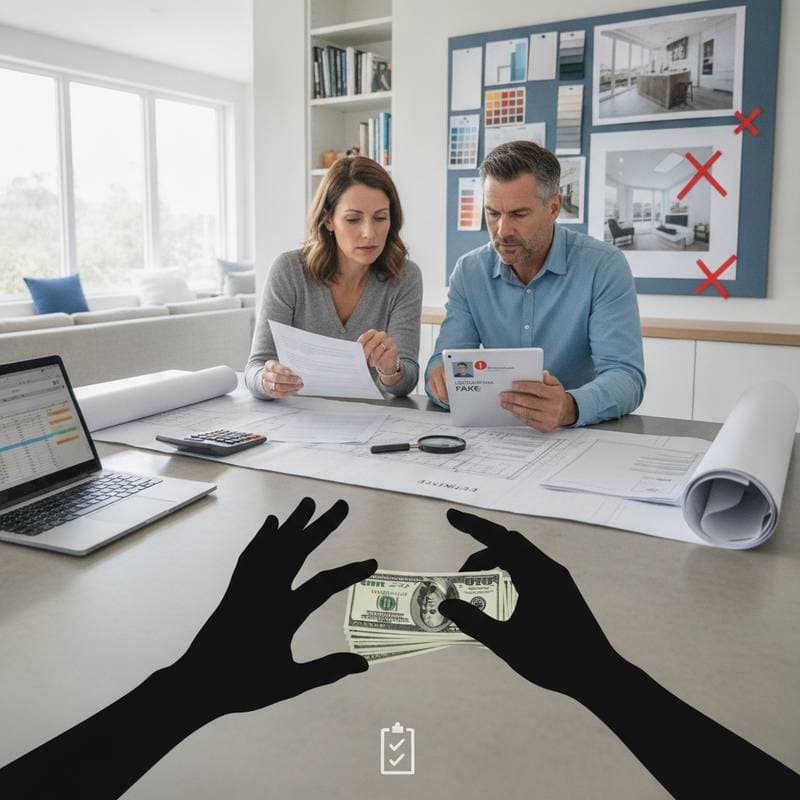
Requests for substantial deposits prior to starting work merit immediate scrutiny. While modest amounts to cover initial materials prove acceptable, demands for 50 percent or more of the project cost indicate high risk. Fraudsters frequently collect these sums and then cease communication.
Victims endure prolonged efforts to contact the contractor, often without resolution. Legal recourse becomes complicated without proper records.
Secure payment strategies:
- Limit initial deposits to 10-20 percent of the total estimate.
- Structure payments in increments tied to completed phases, such as foundation work or framing.
- Insist on checks or electronic transfers for traceability; reject cash transactions.
High-Pressure Sales Tactics
Urgency tactics, such as claims of expiring discounts or limited availability, aim to bypass rational decision-making. Contractors may insist on immediate payment to lock in rates or materials. This approach preys on enthusiasm for timely project starts.
One homeowner shared an experience: a contractor pressured her into same-day payment for a kitchen overhaul, citing a special rate. The individual collected the deposit and never returned, leaving the project stalled.
Maintaining composure amid urgency:
- Pause to evaluate proposals thoroughly, regardless of deadlines imposed.
- Obtain multiple quotes from licensed professionals to benchmark pricing.
- Consult trusted advisors or online resources for standard industry rates before committing.
Hidden Fees and Scope Creep
Low initial bids that escalate through add-ons represent a common deception. Minor adjustments, like color variations or additional fixtures, incur unexpected charges. Without clear boundaries, costs accumulate rapidly.
Contractors justify these by referencing unlisted items in vague proposals. Homeowners face disputes over what constitutes the original agreement.
Strategies to control costs:
- Detail every aspect of the project in a comprehensive written specification.
- Document approvals for any modifications with updated estimates.
- Negotiate a fixed-price contract where possible, or cap change orders at a set percentage.
Abrupt Project Abandonment
Projects that begin promisingly but halt midway often follow partial payments. Contractors may complete initial demolition or setup, then become unresponsive. Follow-up attempts through calls or visits yield no results.
This pattern exploits trust built in early stages. Scammers prioritize funds over completion.
Safeguards against abandonment:
- Tie payments strictly to inspectable milestones, withholding funds until verification.
- Maintain detailed logs of communications, schedules, and progress photos.
- Report suspected fraud promptly to consumer protection agencies and law enforcement for investigation.
Relying on Intuition for Final Vetting
Intuition serves as a vital safeguard when formal checks align but concerns persist. Subtle indicators, such as evasive responses to financial queries or reluctance to provide references, warrant caution. Professionals embrace detailed discussions and documentation.
In one case, a homeowner encountered a licensed contractor whose charm masked inconsistencies. The individual dismissed contract specifics and pressured for verbal agreements. Declining the bid later proved wise, as complaints surfaced from prior clients.
Honoring intuitive signals:
- Schedule in-person meetings to assess communication and professionalism.
- Seek input from recent references via direct contact, not provided lists.
- Walk away from arrangements that feel coercive or unclear.
Building Lasting Project Success
Partnering with a reliable contractor transforms renovations into collaborative achievements. Shared progress updates and mutual respect foster smooth executions. Homeowners gain confidence in the outcome, from design to finish.
Invest effort in thorough screening, including license verifications, reference calls, and contract reviews. These measures, though time-intensive, prevent disruptions and ensure value. Ultimately, a completed remodel delivers enduring satisfaction and enhanced living spaces.
Homeowners benefit from community knowledge sharing. Discussing encounters with unreliable contractors strengthens collective awareness. Informed vigilance deters fraudulent practices, promoting fair and efficient industry standards.