
Which Saves More: Reface or Replace Cabinets in 2025
Data from leading remodeling platforms indicates a 40 percent increase in searches for cabinet refacing over the past quarter, even as replacement projects dominate overall expenditures. Homeowners frequently inquire on design forums about the most economical choice that preserves aesthetics and utility. This analysis details the aesthetic, budgetary, and practical distinctions between refacing and replacing kitchen cabinets to align with your residence, finances, and vision.
From personal experience in a modest home filled with vintage glassware and wood accents, both methods yield impressive results. A targeted refresh through refacing suits time constraints, whereas replacement supports ambitious overhauls. Grasping these nuances enables informed spending for enduring appeal.
Cost Comparison: Refacing Delivers Substantial Savings
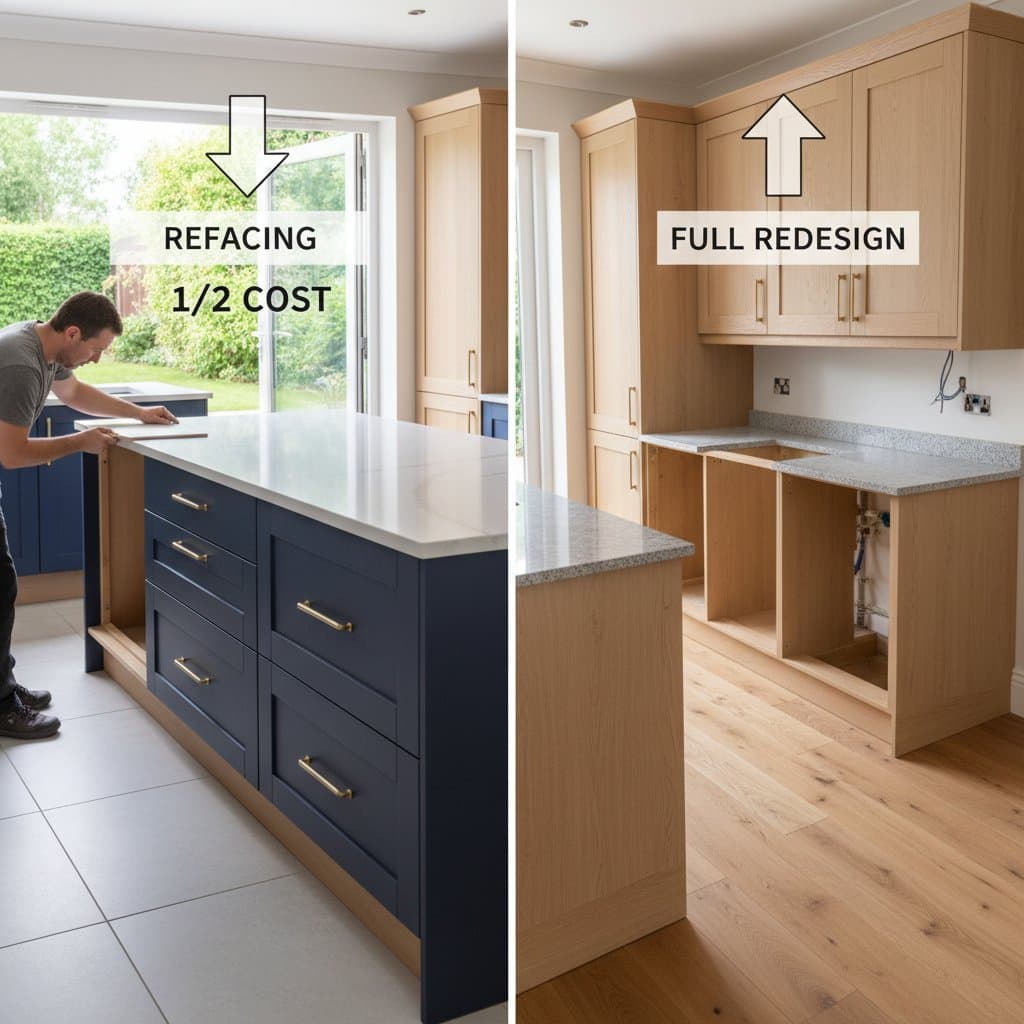
In 2025, average costs for cabinet refacing range from $4,000 to $8,000 for a standard kitchen, depending on size and materials. This approach updates doors, drawer fronts, and hardware while retaining existing boxes, which accounts for the lower price. Labor typically spans one to three days, minimizing disruption.
Full replacement, by contrast, costs $10,000 to $25,000 or more, including new cabinetry, installation, and potential layout adjustments. Projects often require one to four weeks, with higher material and demolition expenses. Refacing thus offers savings of 40 to 60 percent, freeing funds for complementary upgrades like countertops or appliances.
1. Fresh Facades
Location: Seattle, Washington
Designer: Leah Morales Interiors
This kitchen underwent a notable refacing that preserved its oak cabinet bases. A matte sage veneer covered the doors and fronts, accented by brushed brass hardware and walnut edge banding for a seamless modern-traditional fusion.
The homeowner avoided half the replacement expense, achieving a tranquil contemporary vibe. Soft-close hinges and upgraded slides enhanced usability without altering the structure, demonstrating refacing's efficiency for style elevation.
2. Complete Structural Renewal
Location: Denver, Colorado
Designer: Apex Kitchen Designs
Replacement transformed this outdated kitchen by installing custom maple cabinets with integrated soft-close mechanisms and pull-out organizers. The layout expanded to include a peninsula, improving workflow and storage capacity.
Though costs exceeded $15,000, the investment justified through enhanced durability and resale value. New insulation in cabinet walls reduced energy loss, making this ideal for homes needing functional reconfiguration.
3. Veneer Revival
Location: Portland, Oregon
Designer: Ben Harlow & Co.
Refacing revitalized a compact galley kitchen with high-pressure laminate in soft gray, paired with black matte pulls. Sturdy original boxes received internal plywood reinforcement for added strength.
Savings permitted additions like quartz surfaces and under-cabinet illumination, brightening the area affordably. This example illustrates how refacing maximizes design impact on limited budgets.
4. Custom Configuration Overhaul
Location: Austin, Texas
Designer: Lone Star Interiors
Full replacement here featured thermofoil cabinets in white with recessed lighting channels and corner lazy Susans. The design shifted from wall-to-wall units to open shelving, fostering an airy feel.
Budget allocation reached $18,000, but the result supported modern appliances and improved ergonomics. Such changes suit spaces where original cabinets limit accessibility or aesthetics.
5. Painted Precision
Location: Chicago, Illinois
Designer: Nora Jenkins Design
Artistic refacing applied deep navy enamel on MDF doors, complemented by polished nickel knobs in a mid-century setting. The finish resists wear, ensuring long-term vibrancy.
Adjustable shelving and soft-close glides upgraded functionality within the existing layout. This method provides bold statements economically, preserving the kitchen's spatial integrity.
6. Innovative Layout Redesign
Location: Miami, Florida
Designer: Tropical Homes Studio
Replacement introduced shaker-style cabinets in light oak, with integrated appliance garages and toe-kick drawers. The reconfiguration optimized traffic flow in a high-use family kitchen.
At around $20,000, the project incorporated moisture-resistant materials for the humid climate. Benefits include superior organization and adaptability for future needs.
7. Environmental and Lifestyle Factors
Sustainability shapes remodeling choices in 2025. Refacing conserves resources by reusing cabinet frames, diverting less waste to landfills and requiring minimal new production energy. Eco-focused individuals often favor this for its lower carbon footprint.
Replacement demands more materials but enables efficiency gains, such as optimized layouts that integrate energy-saving LEDs or efficient appliance placement. Both options advance sustainable habits when paired with recycled elements or low-VOC finishes.
9. Visual Transformation Potential
High-quality execution yields dramatic aesthetics in either method. Refacing with matched veneers and precise installations rivals bespoke cabinetry, refreshing surfaces without demolition.
Replacement unlocks boundless customization, from altering dimensions to incorporating unique features like glass-fronted uppers. Strategic lighting amplifies both: under-cabinet strips accent refaced textures, while integrated channels in new units create ambient glows.
11. Decision Checklist
Evaluate these criteria to select between refacing and replacement:
- Cabinet Condition: Assess if existing boxes remain structurally sound and level.
- Design Goals: Determine if surface updates suffice or if layout changes are essential.
- Budget: Calculate available funds; refacing suits tighter constraints, replacement demands more.
- Timeline: Factor in project duration; refacing completes faster with less mess.
- Sustainability: Weigh waste reduction against potential efficiency improvements.
- Resale Impact: Consider how each enhances home value in your market.
This framework streamlines consultations with professionals.
12. Maximizing Long-Term Value
For refacing success, select premium veneers, paints, and hardware to ensure durability and cohesion. Prioritize reinforced interiors and quality mechanisms for sustained performance.
In replacement projects, focus on ergonomic layouts, smart storage like spice racks, and scalable designs. Both deliver professional results through meticulous planning, balancing initial costs with years of enjoyment and potential property appreciation.