
2026 Red Flags That Reveal Untrustworthy Contractors
Home renovation projects attract increasing attention each year. Rising demand for remodeling services has also led to more reports of incomplete work and unexpected costs. Consumer agencies note a steady climb in complaints about contractor practices.
This guide presents the clearest warning signs to evaluate before committing funds or signing documents. Homeowners planning kitchens, exteriors, or additions can use these markers to reduce risk and secure reliable results.
Quick Checklist Before Hiring
- Require a complete written contract that lists scope, materials, schedule, and payments.
- Confirm current licensing and both liability and workers compensation insurance.
- Reject any request for large cash deposits or cash only transactions.
- Obtain recent local references and inspect finished work in person.
- Verify that required permits will be pulled and that change orders stay in writing.
1. No Written Contract
A professional always supplies a detailed agreement covering work scope, materials, payment timing, and completion dates. Verbal assurances alone leave homeowners without recourse when issues arise. The absence of paperwork usually signals an unwillingness to accept responsibility.
2. Vague or Inflated Estimates
Legitimate bids itemize labor, specific materials, and contingency amounts. Round numbers or prices far below competing quotes often precede later demands for extra payment. Request line by line breakdowns and compare at least three proposals before proceeding.
3. Unverified License or Insurance
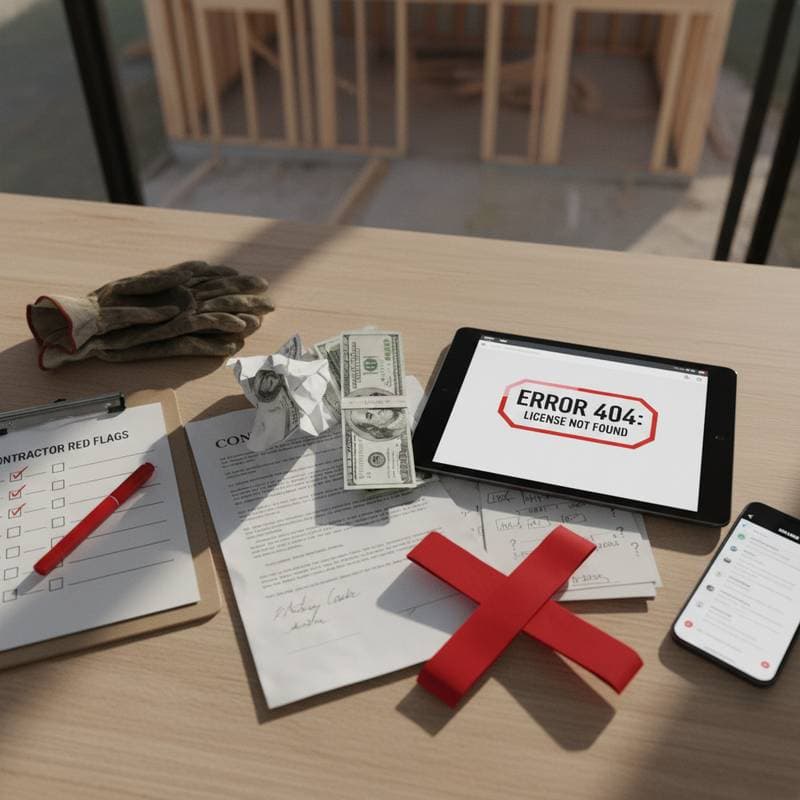
Every contractor must present current license numbers and certificates for liability plus workers compensation coverage. Claims that documents are pending or held by another party require immediate verification with local authorities. Unlicensed operators expose property owners to full financial liability for accidents or damage.
4. Cash Only Payments
Insistence on cash or refusal of checks and electronic transfers removes any traceable record. Reputable firms issue receipts through standard payment channels and welcome documentation. Large cash discounts frequently mask an intent to disappear once funds are received.
5. No Local References
Established contractors readily supply recent client contacts and permit site visits to completed projects. Vague or distant references suggest limited local experience. Cross check online reviews for consistency in dates, project types, and response quality.
6. High Pressure Sales Tactics
Offers that expire within hours or demands for immediate signatures limit time for proper review. Trustworthy professionals encourage comparison and answer questions without urgency. Rushed decisions commonly result in overlooked contract terms.
7. Lack of Physical Address
Businesses that list only a phone number or post office box provide no verifiable location for follow up. Public records and directory listings confirm whether an operation maintains a stable presence. Fly by night operators often vanish when problems surface.
8. No Portfolio or Inconsistent Work Samples
Reliable contractors maintain organized photos and project records that match claimed experience. Hesitation or mismatched images indicate possible use of borrowed work. Request before and after documentation for jobs similar in scope to the planned project.
9. Constantly Changing Crew
Frequent turnover among workers points to poor management and inconsistent quality. Ask for the name of the daily supervisor and expected team members. Stable crews reduce errors and maintain accountability throughout the job.
10. Refusal to Obtain Permits
Projects affecting structure, plumbing, or electrical systems require permits under local codes. Promises to skip this step to save time expose owners to fines and failed inspections. Responsible contractors include permit costs and timelines in their estimates.
11. Poor Communication
Delayed responses or vague progress reports during initial discussions predict larger problems later. Professionals provide regular updates and clear explanations of decisions. Consistent contact keeps projects on schedule and within budget.
12. Overly Large Deposits
Standard deposits cover initial materials and scheduling only. Requests exceeding a modest percentage of the total price often precede non completion. Tie subsequent payments to documented milestones rather than upfront sums.
13. No Written Warranty
Quality contractors supply written warranties that state coverage length and resolution procedures. Verbal assurances leave homeowners without defined recourse. Warranties serve as evidence of confidence in workmanship.
14. Negative or Inconsistent Online Presence
Review patterns across platforms for recurring complaints and professional responses. Missing contact details or sudden name changes suggest attempts to evade past issues. Transparent operators maintain accurate listings and address feedback openly.
15. No Detailed Schedule
A realistic timeline with start and finish dates allows homeowners to plan around daily routines. Vague assurances such as finishing soon provide no accountability. Written schedules enable early detection of delays.
16. Refusal to Sign Change Orders
Unexpected adjustments require written documentation of added costs and scope. Verbal agreements on modifications leave both parties unprotected. Professionals document every revision to prevent disputes.
17. Unprofessional Behavior
Late arrivals, disorganized sites, or dismissive communication during early meetings forecast future difficulties. Attention to property and schedules reflects overall reliability. Small lapses at the outset rarely improve once work begins.
18. Unclear Material Sources
Contractors unable to name suppliers or offering unusually cheap substitutes may substitute inferior products. Request invoices and supplier contacts to confirm specifications. Transparent sourcing protects long term durability.
19. No Proof of Past Projects
Borrowed images or unverified testimonials require direct confirmation through references and site visits. Authentic professionals discuss specific details of prior work without hesitation. Cross check layouts, finishes, and timelines with former clients.
20. Resistance to Oversight
Objections to inspections or progress checks indicate a preference for secrecy. Homeowners retain the right to verify work quality and compliance. Open contractors view oversight as standard practice.
Safeguard Your Renovation Investment
Apply these checks during initial conversations and proposal reviews. Consistent attention to contracts, credentials, and communication reduces exposure to incomplete work or added costs. Homeowners who verify each point gain greater control over project outcomes and final results.