
Why Biophilic Design Defines 2026 Remodels
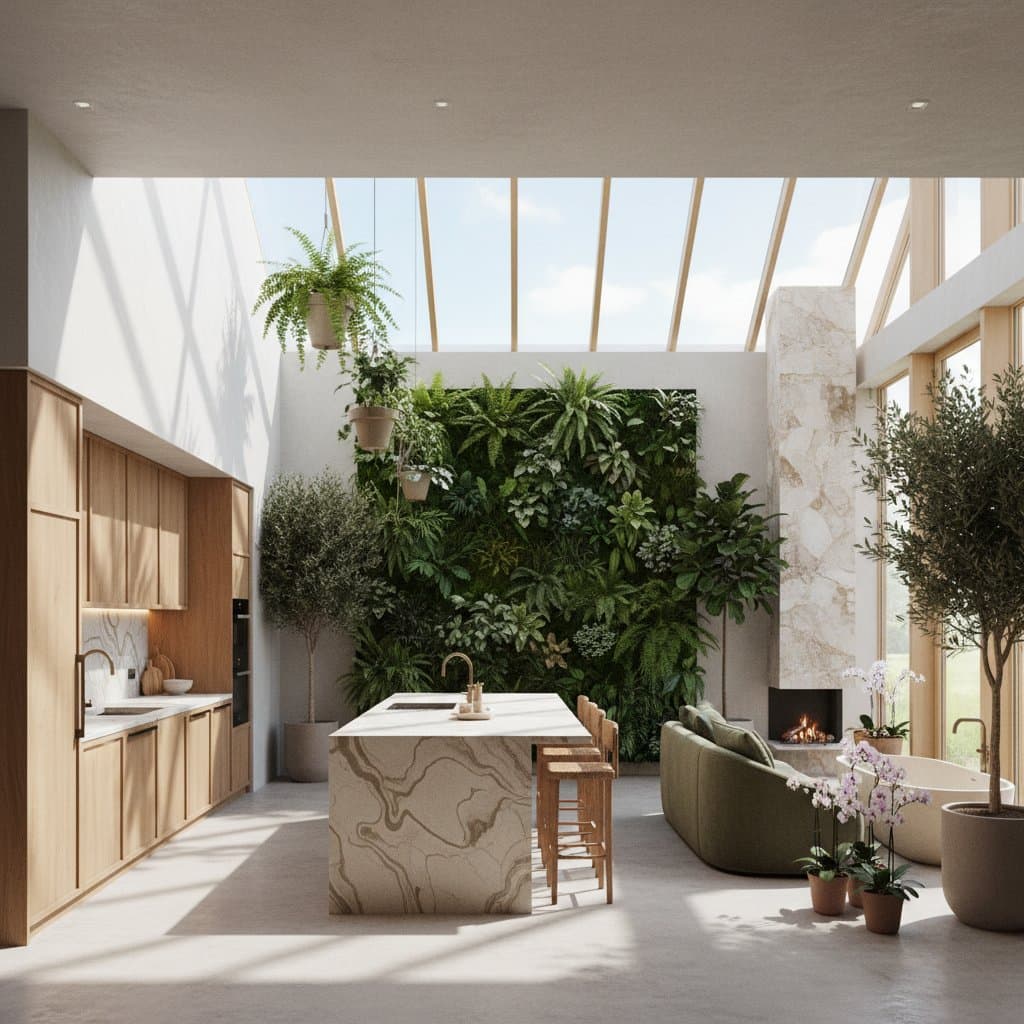
Home design platforms reveal a clear pattern in the most popular images this year. Spaces ranging from urban apartments to expansive seaside residences all emphasize a direct link to the natural world. Features such as living walls, stone surfaces, and abundant natural light prevail, signaling a lasting movement. Homeowners and professionals select biophilic design for renovations that foster health, advance eco-friendly practices, and deliver enduring aesthetic appeal. The following sections examine how this approach reshapes indoor environments and highlight the strengths of specific implementations.
1. Light Garden
Harrison & Field Studio crafted a living room in a London apartment that seamlessly merges interior and exterior realms. A steel-framed glass wall slides open to a compact terrace, while linen drapery in soft ecru tones diffuses sunlight throughout the area. The color scheme draws from clay, moss, and sand hues that echo the adjacent garden. This setup enables light to dance across surfaces, altering the atmosphere as the day progresses. The sliding doors enhance airflow for better indoor air quality, and the varied textures provide a stable, vibrant foundation.
2. Forest Feel
Nia Caldwell Design incorporated vertical Douglas fir paneling in a Seattle family residence to enclose a reading nook next to a large window. A custom bench, covered in olive velvet, orients toward a panorama of tall evergreens. This arrangement delivers both visual and psychological ties to the outdoors. The wood's natural patterns catch sunlight, producing a subtle glow that varies with weather conditions. Such a feature enriches routine activities by providing an inviting spot for contemplation, reading, or dialogue, demonstrating how modest changes can cultivate profound relaxation.
3. Urban Canopy
Studio Deru elevated greenery to a foundational role in a Chicago loft, installing a suspended planter grid brimming with trailing pothos along the ceiling. This element visually compresses the lofty industrial volume, fostering intimacy. Beneath, polished concrete floors pair with linen-upholstered modular furniture to harmonize rigid and yielding textures. The grid also manages acoustics by dampening echoes and softening incoming light. Overall, the foliage blurs room boundaries, humanizing the raw structure and instilling a welcoming warmth.
4. Living Hallway
Oliver & Moss Design reimagined a slender passageway in a San Francisco row house as an interactive exhibit. One side hosts a modular green wall stocked with resilient ferns and cascading ivy. Across from it, oak planks extend from the floor up a brief staircase, dissolving divisions between floors. The plants purify the air and muffle noises naturally. This transformation turns a mere connector into an engaging pause, where guests linger to observe shifting light on the wood, unifying the entire residence from entrance to upper levels.
5. Desert Texture
Lina Esparza Design Group infused desert essence into a Phoenix living room through rammed-earth walls and loose linen slipcovers on the furniture. Earthy shades of sand and sienna tie the interior to its regional context. Expansive windows frame views of local cacti and succulents, rounding out the scene. Sourcing materials nearby minimizes environmental impact and strengthens regional identity. The rammed earth regulates indoor temperatures effectively, ensuring steady comfort. The result conveys authenticity, grounded permanence, and unpretentious charm.
6. Indoor Grove
Mara Fulton Studio positioned potted olive trees as focal points in a New York loft's open living zone. Limestone flooring and cream linen drapes temper the space's industrial sharpness. These trees fulfill decorative and restorative roles by moderating light, introducing organic patterns, and evolving over time. The composition achieves a peaceful urban harmony, affirming that natural and metropolitan elements integrate smoothly. Details from soil-inspired colors to gathered sunlight create deliberate, cohesive serenity.
The Enduring Appeal of Biophilic Design
Biophilic design endures because it restores a fundamental human connection. Amid constant digital interruptions and synthetic illumination, these environments provide essential respite and stability. Research affirms the benefits, showing that exposure to organic materials, sunlight, and vegetation lowers stress levels and sparks innovation. Beyond psychology, the approach offers tangible advantages like superior air filtration and thermal control through elements such as timber, rock, and vertical gardens. Homes built this way prove more livable and require fewer upkeep efforts long-term.
Designers value how biophilic renovations mature elegantly. Organic surfaces gain character through patina, foliage adapts to personal changes, and versatile illumination maintains adaptability. Individuals who pursue hands-on projects or curate antique pieces find these settings accommodating and individualized. Flaws integrate into the narrative, enhancing rather than detracting from the overall charm.
Incorporating Biophilic Elements into Daily Spaces
Start by assessing natural light sources in your home and maximizing them with sheer fabrics or minimal framing. Introduce plants strategically, selecting low-care varieties that suit your light conditions and air flow. Opt for locally sourced woods and stones to build authentic textures that regulate climate naturally. These steps not only elevate well-being but also create resilient, personalized interiors that evolve with you.