
Plan Your Outdoor Kitchen Budget Wisely
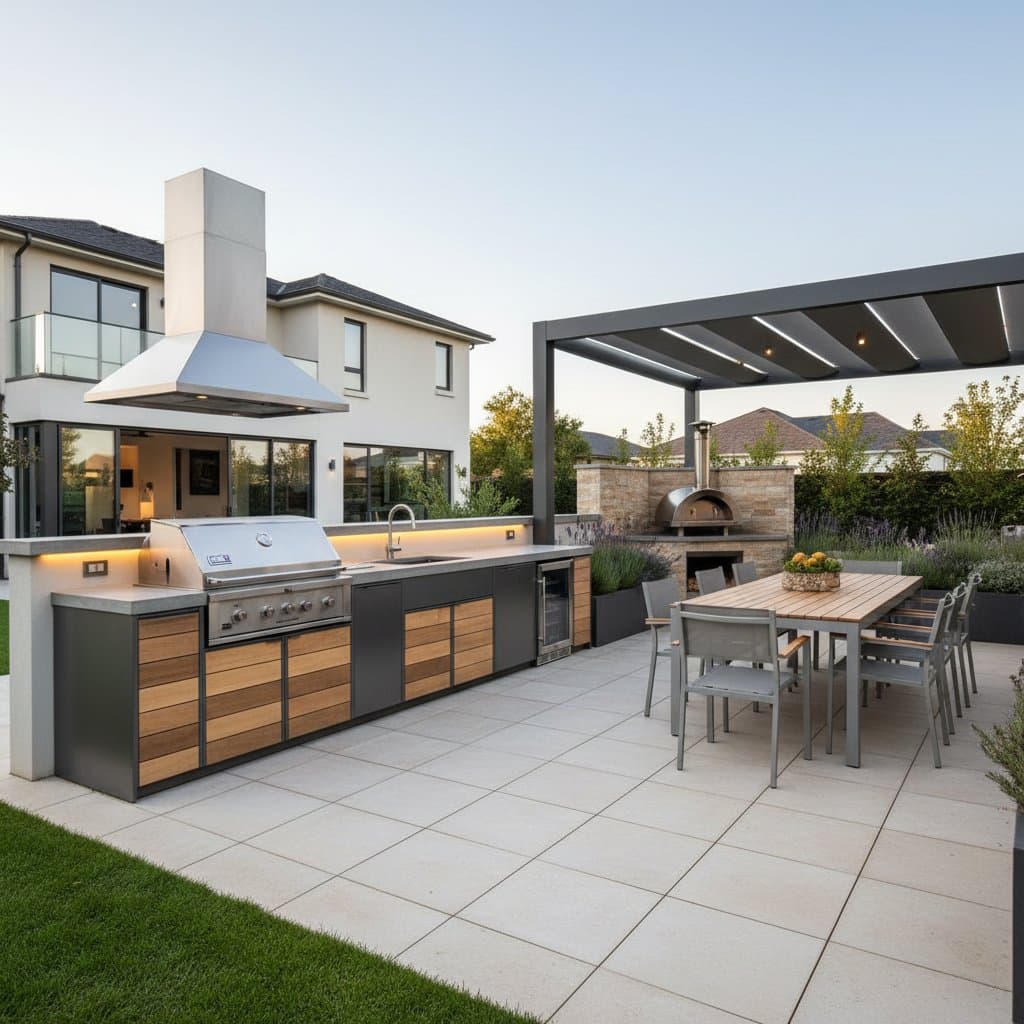
Every summer, the aroma of neighboring barbecues wafts over garden fences, sparking visions of an ideal outdoor kitchen. Picture sleek stone counters, twinkling fairy lights beneath a pergola, and the sizzle of marinated meats on the grill. In reality, many setups begin modestly with a basic barbecue, a weathered folding table, and ample imagination.
Building a functional outdoor kitchen delivers significant rewards, yet it risks depleting savings without careful planning. Through thoughtful budgeting, you transform your garden into a versatile extension of your home that suits your lifestyle.
Start with Your Cooking Style
Before browsing catalogs of high-end grills and stone islands, evaluate your outdoor cooking habits. Do you grill burgers sporadically, or prepare elaborate family meals regularly? Consider whether a built-in pizza oven appeals, or if a straightforward gas grill suffices.
Your routines dictate budget priorities. Investing in an elaborate system for infrequent use wastes resources. For typical households, prioritize a reliable grill, adequate counter space, and a sink for cleanup to establish a solid foundation.
Budgeting by Zones
Divide your outdoor kitchen into distinct zones, similar to an indoor layout: cooking, preparation, serving and dining, and storage. This approach maintains balance amid tempting upgrades.
- Cooking Zone: Expenses concentrate here. A built-in gas grill may exceed $5,000, while a freestanding unit delivers comparable results for under $1,000. For a wood-fired pizza oven, include $2,000 to $4,000 for installation plus ongoing fuel needs.
- Preparation Zone: Durable counters in granite or stainless steel cost $50 to $100 per square foot. Opt for composite stone or treated concrete at $20 to $40 per square foot for similar aesthetics at reduced expense.
- Serving and Dining Zone: Furniture and lighting enhance appeal. Combine a $300 reclaimed timber table with $150 chairs each for a casual vibe under $1,000 total, avoiding premium pricing.
- Storage Zone: Outdoor cabinets range from $500 to $2,000 per unit. Use mobile carts at $100 to $200 or waterproof bins for $50 to $100 as discreet, affordable alternatives.
The Hidden Costs No One Mentions
Detailed budgets often overlook essential add-ons. Utilities demand significant investment: extending water, gas, and electricity involves trenching at $10 to $20 per linear foot and electrician fees of $500 to $1,500 for safe wiring.
Flooring adds another layer. Sandstone pavers, at $15 to $30 per square foot plus $5 to $10 for labor and sealing, escalate quickly. Choose concrete slabs at $4 to $8 per square foot, gravel for $2 to $5, or porcelain tiles at $3 to $7 for budget-friendly style.
Weather protection proves vital. A pergola costs $2,000 to $5,000, while a retractable awning runs $1,000 to $3,000, shielding elements and preserving furnishings from seasonal wear.
The DIY Temptation
Self-building appeals for savings, especially if you possess basic tools like a drill and level. Modular kits, starting at $500, combined with paving slabs at $2 to $5 each, enable impressive results with time investment.
One homeowner constructed a pallet-based bar for under $200 using recycled tiles, though minor sagging occurred post-events. Assess your expertise honestly; imperfect installations, such as unstable sinks, undermine long-term satisfaction.
Setting Priorities and Phases
Complete setups rarely materialize instantly due to financial constraints. Phased development allows gradual enhancement while testing usability.
Phase 1: Install the grill, secure flooring, and basic prep surface for immediate functionality, typically under $2,000.
Phase 2: Incorporate fixed counters, lighting, and a sink, budgeting $1,500 to $3,000, assuming plumbing access.
Phase 3: Add amenities like built-in seating, a bar, or mini-fridge for $1,000 to $4,000, refining based on experience.
This method prevents overextension and ensures investments align with actual needs.
Weatherproofing Without Overspending
Unpredictable weather limits usability without protection. Sturdy umbrellas cost $100 to $300, retractable awnings $800 to $2,000, and pergolas with vines provide shade for $1,500 to $4,000.
Appliance covers at $20 to $50 each prevent corrosion. A fire pit ($200 to $500) or patio heater ($100 to $300) extends seasons, fostering comfortable gatherings year-round.
Style Meets Sense
Aesthetics tempt overspending on marble or designer fixtures. Blend timber, stone, and metal for depth without excess; for instance, seal scaffolding boards into counters for $10 to $20 per square foot.
Incorporate upcycled elements like surplus kitchen tiles for backsplashes, adding narrative charm at minimal cost. These choices yield personalized, enduring designs.
Maximizing the Value of Your Outdoor Kitchen
With construction complete, outdoor cooking reveals its delights, though initial adjustments arise. Relocate items like fridges nearer grills or add shade to seating as patterns emerge.
Beyond meals, this space hosts relaxed mornings, spontaneous evenings, and shared mishaps. Thoughtful planning ensures it enriches daily life sustainably.