

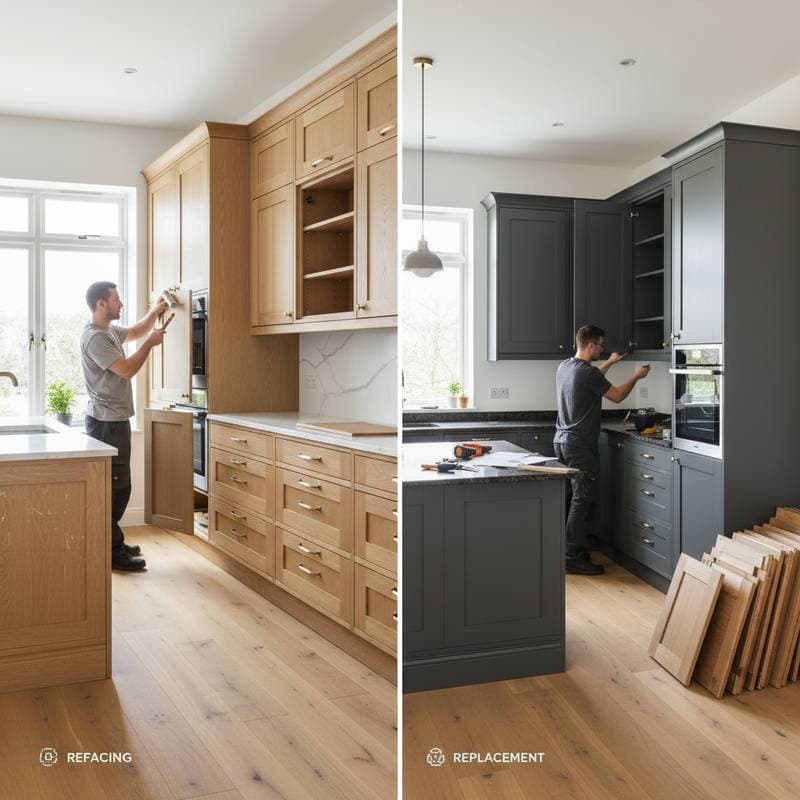
Reface or Replace: Understanding 2026 Kitchen Cabinet Costs
Kitchens evolve with family needs and design preferences. Homeowners facing outdated cabinets must decide between refacing existing ones or installing new units. This choice influences budget, functionality, and the space's overall appeal.
As an architect with years of experience guiding renovations, I evaluate factors such as expense, durability, and lifestyle fit. The guidelines below provide a structured approach to this decision. They cover pricing details, potential pitfalls, and strategies for achieving a kitchen that serves you well for years.
1. Evaluate Cost Ratios Thoroughly
Homeowners frequently overlook how refacing expenses can approach those of replacement when accounting for all elements. Initial estimates might suggest refacing saves significantly, but add-ons change the picture.
Refacing typically runs 50 to 70 percent of replacement costs for similar quality. In compact kitchens, the gap narrows further with affordable stock cabinets. To clarify, request parallel bids from one contractor: detail refacing versus installing semi-custom options.
Break down labor, materials, and finishes in the quotes. Refacing per linear foot often falls in the moderate to high range due to custom veneers. Stock replacements might exceed this slightly, depending on door styles and installation demands.
Opt for solid wood veneers if durability matters, though they cost more than laminates. Include hardware like soft-close mechanisms early, as these escalate totals rapidly. This methodical comparison highlights value over short-term economies.
2. Assess Environmental and Disposal Impacts
Full replacements generate substantial waste, directing materials to landfills. Refacing preserves the core structure, yet it introduces concerns around adhesives and energy consumption.
Refacing qualifies as eco-friendly primarily with sturdy existing boxes and sustainable materials. Verify that contractors use low-VOC finishes and non-toxic bonds to minimize health risks.
Select veneer panels with certifications from bodies like the Forest Stewardship Council. For replacements, prioritize donating usable components to habitat programs or recycling facilities.
Technical choices matter: prefer water-based glues over solvent types to limit air pollutants. In new installs, seek formaldehyde-free composites for cabinet construction. These steps cut waste and enhance indoor air, fostering a healthier cooking environment.
3. Factor in Labor Demands
Refacing appears simpler than it proves, demanding precise carpentry that rivals or exceeds replacement efforts. Delays from site issues inflate timelines and bills unexpectedly.
Projects extend when facing uneven surfaces or damaged frames. Professionals charge premiums for preparatory fixes like leveling and sanding.
Allocate budget for thorough prep work, including cleaning and smoothing cabinet fronts. Insist on assessments for irregularities before veneer application.
Precision counts: veneers adhere best to flat bases, where even minor deviations lead to future failures. For painted finishes, control humidity and apply primers correctly to avoid bubbling. Acknowledging these labor realities averts overruns and secures professional results.
4. Integrate Hardware and Accessories Strategically
Refacing without hardware updates perpetuates usability problems like sticky drawers or noisy doors. Upgrades transform the project from cosmetic to comprehensive.
Existing frustrations persist if only surfaces change. Plan enhancements to elevate daily interactions with the space.
Incorporate new pulls, hinges, and slides from the outset. For refacing, match hole patterns to prevent extra drilling. Replacements offer flexibility for advanced features like full-extension storage.
Common spacings include 3-inch centers for knobs; shifting to larger requires patching old holes. Concealed hinges streamline modern looks without altering frames. Such selections boost efficiency and refine the kitchen's aesthetic.
5. Prepare for Project Disruption
Both approaches interrupt routines, yet underestimating this leads to unnecessary strain. Kitchens anchor home life, so downtime affects meals and organization.
Clear counters and protect adjacent areas in advance. Refacing might limit access for a week; replacements extend to multiple weeks with demo and reinstalls.
Arrange alternate cooking zones, perhaps using a grill or slow cooker elsewhere. Secure off-site storage for essentials during peak chaos.
Refacing involves phased drying for bonds and paints, while replacements coordinate trades for wiring and plumbing. Review timelines with your team to sequence tasks efficiently. Proper planning eases transitions and upholds project quality.
Aligning Choices with Daily Life
After completion, the kitchen's performance reveals the decision's wisdom. Quality refacing revives appearance while retaining structural integrity. Replacements enable layout tweaks and superior storage.
The optimal path aligns with your habits, not fleeting styles. A solid reface might sustain another ten years of service. A thoughtful replacement redefines the space to nurture routines and gatherings. Focus on enduring benefits to guide your renovation.