

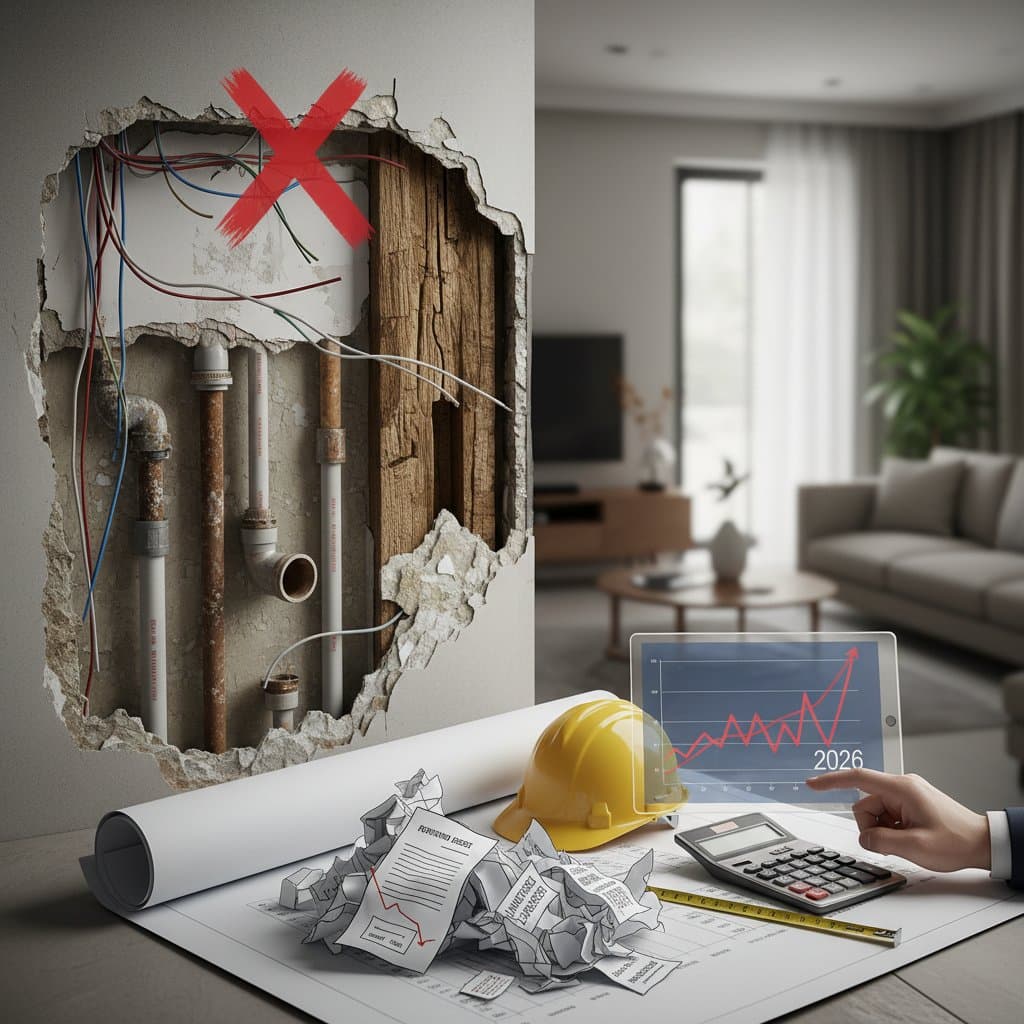
Understanding Potential Remodel Expenses
Planning a kitchen update or larger home renovation requires attention to more than surface finishes. Many projects exceed initial projections because of expenses that surface only after work begins. Preparation reduces the chance of major disruptions.
A national survey indicates that roughly one third of homeowners complete renovations within their starting budget. The remainder face additional charges that appear during demolition or construction phases. Awareness of frequent issues allows better financial planning from the outset.
Frequent Unexpected Expenses
Several categories of costs appear regularly once projects start. Each stems from conditions that remain hidden until inspection or removal of existing materials.
Structural Issues
Demolition often reveals problems such as damaged floor joists, pest activity, or water intrusion. These conditions require immediate correction before new work proceeds.
Allocate at least fifteen percent of the overall budget to a contingency reserve. Home inspector David Morales notes that this reserve proves valuable when hidden conditions like mold appear behind existing finishes.
Utility System Updates
Homes built before current codes frequently need electrical or plumbing improvements. Modern appliances and fixtures demand capacity that older systems cannot provide safely.
- Full home rewiring typically ranges from three thousand to eight thousand dollars.
- Plumbing replacement often falls between two thousand and six thousand dollars.
- Electrical panel upgrades cost between twelve hundred and three thousand dollars.
These updates support safety and future property value even though they add to the initial outlay.
Permit and Inspection Charges
Local requirements mandate permits for most structural or mechanical work. Fees vary by municipality and project scope, sometimes reaching several thousand dollars when multiple trades are involved.
Contact the building department early to obtain exact fee schedules. This step prevents work stoppages and clarifies total project expenses.
Mid Project Design Changes
Material substitutions after installation begins increase both product and labor costs. Interior designer Rachel Emerson observes that homeowners often revise selections once samples appear in place.
Review all finish selections thoroughly before ordering. Confirm availability and pricing to limit later adjustments.
Schedule Disruptions and Labor Adjustments
Late material deliveries force crews to pause or reschedule. Contractors may apply additional hourly charges for extended timelines or storage needs.
Discuss delay procedures and rate structures with the contractor before signing an agreement. Written terms clarify responsibility for these charges.
Steps to Identify Expenses Early
Detailed preparation uncovers many costs before construction starts. The following actions improve budget accuracy.
- Request itemized proposals that list materials, labor, permits, and contingency amounts separately.
- Arrange a professional inspection to locate wiring, plumbing, or structural concerns in advance.
- Examine any material allowances in the contract and adjust them to current market prices.
- Maintain a dedicated reserve account for items that arise during the work.
Errors That Increase Total Project Cost
Certain decisions made before work begins commonly lead to higher final expenses. Avoiding these patterns protects both budget and timeline.
- Beginning without complete drawings and specifications produces repeated changes.
- Selecting the lowest bid without verifying scope often requires later corrections.
- Omitting design or management support leaves coordination gaps that add time and cost.
- Overlooking incremental upgrades that accumulate across multiple rooms.
Managing the Project Within Approved Limits
Review every contract line for items such as debris removal, overtime rates, and final cleaning. Ask specifically what remains outside the stated scope.
Consider completing structural and mechanical work in one phase and cosmetic elements in a later phase if funds are limited. This sequence keeps essential improvements moving while spreading remaining costs over time.