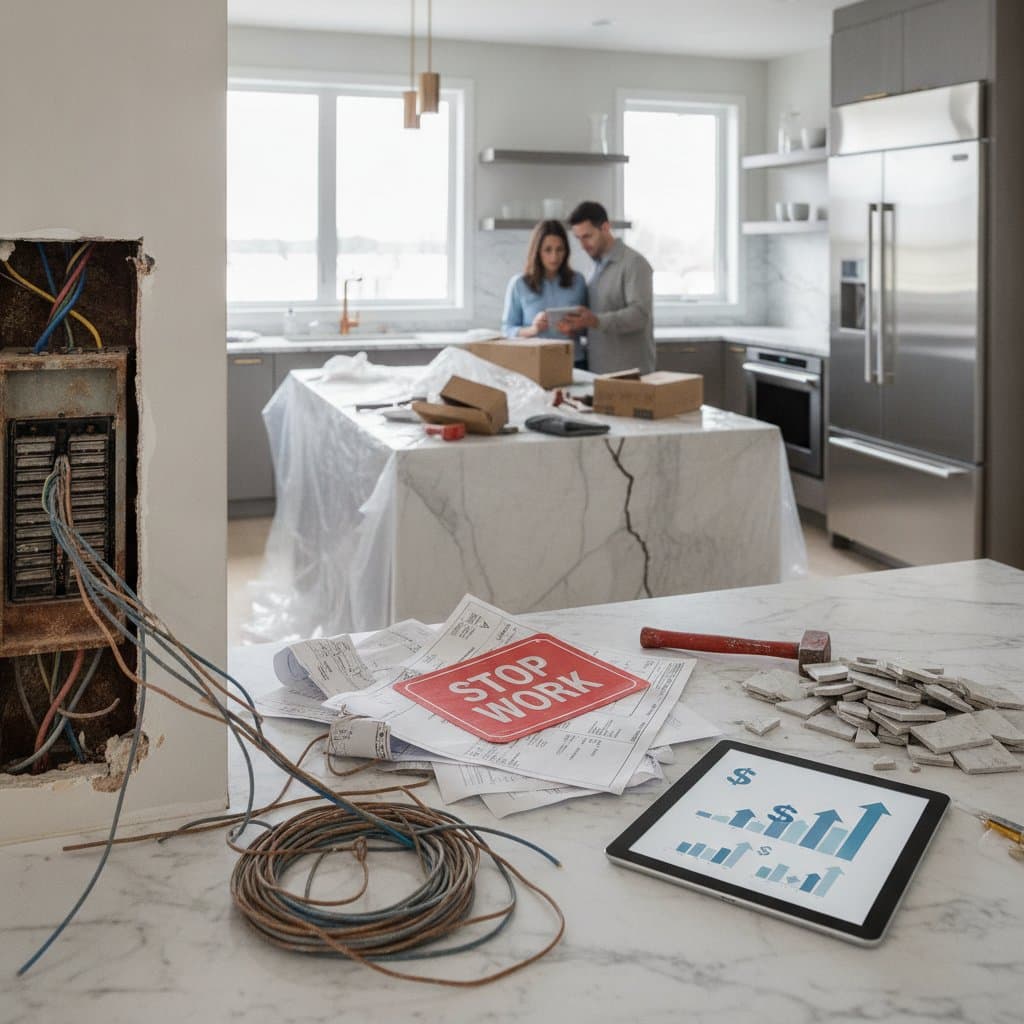

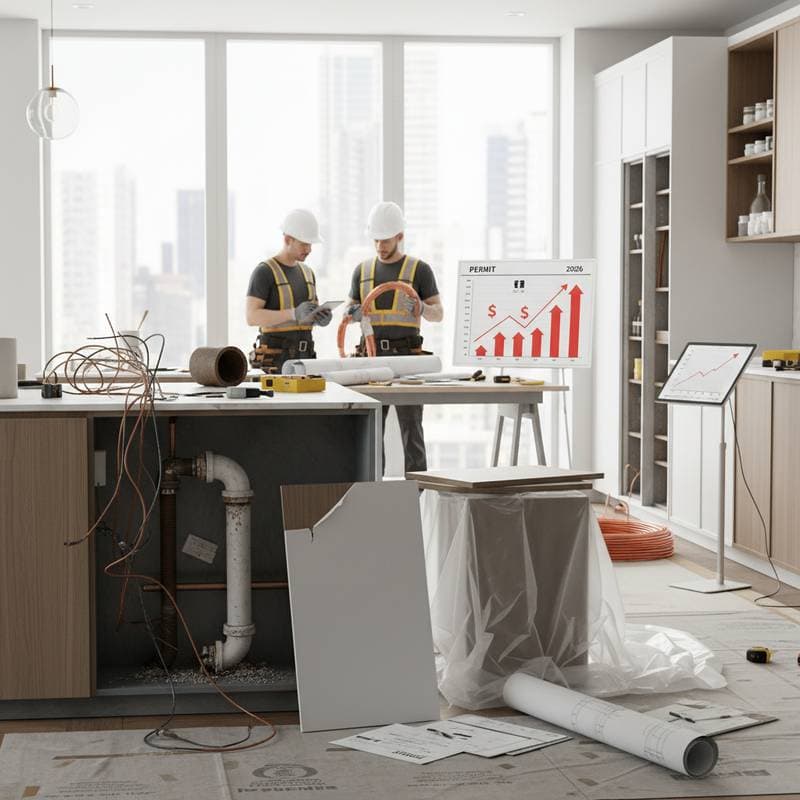
Introduction to Kitchen Remodel Budget Challenges
Planning a kitchen remodel excites homeowners with visions of modern functionality and aesthetic appeal. However, the path to completion frequently encounters unforeseen financial hurdles. In 2026, rising material prices and regulatory demands amplify these risks, turning a straightforward project into a costly endeavor.
This article examines eight common hidden costs that undermine budgets. Each section details the issue, its potential impact, and targeted strategies for avoidance. By addressing these elements early, homeowners secure a renovation that aligns with financial goals.
1. Demolition Discoveries
Demolition marks the initial phase of most kitchen remodels, yet it often reveals structural surprises. Hidden water damage, outdated subflooring, or asbestos in older homes demands immediate attention and additional spending. These findings extend timelines and require specialized remediation.
Average cost impact:
- Minor repairs: $500 to $2,000
- Extensive issues like mold removal: $3,000 to $10,000
Prevention Tip
Conduct a pre-demolition inspection by a structural engineer. Budget an extra 5% for contingencies in this phase. Document existing conditions with photographs to support insurance claims if needed.
2. Plumbing Surprises
Kitchens rely heavily on plumbing systems, and relocating sinks or dishwashers exposes vulnerabilities. Corroded pipes or insufficient water pressure necessitate full replacements. In 2026, updated standards for low-flow fixtures add to the complexity.
Average cost impact:
- Pipe rerouting: $1,500 to $4,000
- New fixtures integration: $800 to $2,500
Prevention Tip
Hire a licensed plumber for an initial assessment. Opt for flexible layouts that minimize pipe alterations. Verify local water efficiency codes before finalizing designs.
3. Electrical Upgrades
Modern kitchens demand robust electrical setups for appliances, lighting, and smart features. Outdated wiring poses safety risks and fails inspections, leading to comprehensive panel upgrades. Increased energy demands in 2026 models exacerbate this need.
Average cost impact:
- Outlet and circuit additions: $1,000 to $3,500
- Full panel replacement: $2,000 to $5,000
Prevention Tip
Engage an electrician early to map requirements. Choose energy-star rated appliances to reduce load. Include GFCI outlets in all wet areas as standard.
4. Appliance Price Fluctuations
Selecting appliances forms a core element of the remodel, but supply chain issues in 2026 drive volatile pricing. Custom sizes or high-end brands incur premium delivery and installation fees. Delays in availability compound holding costs.
**Average cost impact:**n- Mid-range suite: $5,000 to $12,000
- Installation surcharges: $500 to $1,500
Prevention Tip
Research multiple suppliers and lock in prices with written agreements. Consider stock models over custom orders. Factor in extended warranties for long-term savings.
5. Cabinetry and Countertop Customizations
Cabinetry represents a significant investment, and deviations from standard sizes trigger custom fabrication costs. Countertop materials like quartz or granite require precise measurements, with errors leading to waste and rework. Design changes mid-project amplify expenses.
Average cost impact:
- Standard cabinetry: $8,000 to $15,000
- Custom adjustments: 20% to 40% markup
Prevention Tip
Finalize measurements and selections during the design phase. Use semi-custom options for flexibility without full bespoke pricing. Review samples in person to avoid mismatches.
6. Flooring and Backsplash Overruns
Flooring choices affect both aesthetics and durability, but subfloor preparation often uncovers leveling needs. Backsplash installations demand exact tiling, where material shortages or pattern complexities increase labor time. Waterproofing requirements in 2026 add layers.
Average cost impact:
- Premium flooring: $2,000 to $6,000
- Installation extras: $500 to $1,200
Prevention Tip
Select durable, low-maintenance materials suited to kitchens. Plan for grout sealing and edge treatments upfront. Test small areas before committing to full coverage.
7. Building Code Compliance
Building codes evolve to prioritize safety and efficiency, catching many homeowners off guard. Key requirements include energy-efficient lighting, ventilation standards for range hoods, and fire safety clearances around cooktops. Non-compliance halts progress and invites fines or rework.
Expert insight:
“Code compliance is not optional,” said Daniel Price, certified building inspector for Metro Building Services in Atlanta with 19 years of experience. “We see homeowners trying to save on permits, but unpermitted work can void insurance coverage and lower resale value.”
Cost-Saving Move
Ask your contractor to include permit fees in the initial quote. Confirm inspection scheduling responsibilities to avoid project delays that result in higher labor costs.
8. Labor Shortages and Scheduling Delays
Labor availability remains one of the biggest cost drivers in kitchen remodeling. Skilled trades such as electricians, plumbers, and tile installers face high demand, especially in metropolitan markets. Schedule slips lead to holding costs, including temporary kitchen setups or extended rentals.
Average cost impact:
- Labor premium in busy months: 10% to 25%
- Delay-related expenses: $100 to $300 per week for temporary solutions
Mitigation Strategy
Book your contractor at least three months ahead and confirm a written timeline with milestone payments. Include a clause for delay penalties or incentives for on-time completion. Reliable scheduling directly protects your bottom line.
Securing Long-Term Value
A well-executed kitchen remodel enhances daily life and boosts property appeal. Hidden costs arise from overlooked details rather than major missteps. Homeowners who anticipate these challenges maintain control over their investments.
To optimize outcomes:
- Establish a 15% contingency fund at the outset.
- Require itemized quotes and foster open contractor dialogue throughout.
- Arrange inspections promptly to prevent expensive corrections.
- Lock in all design choices prior to demolition.
- Review progress weekly against the agreed timeline.
Professional guidance paired with diligent planning delivers a kitchen that serves for years without financial strain.